If you have ever pulled a squeegee across a window and watched a clean stripe turn cloudy at the edges, the cleaner is usually the first suspect, not the rubber. For most residential and light commercial work, the best window cleaner to use with a squeegee is a low-suds mixture of water and a small amount of neutral dish soap, or a ready-to-use professional glass cleaner designed to leave no film. The cleaner should feel slippery under the blade, not foamy. It should cut oily film without leaving wax, perfume, or a polymer shine that the rubber pushes into a visible line.
That answer is deliberately plain. Squeegee work rewards predictable chemistry and good technique far more than a long list of additives. Once the solution is right, the tool, the rubber edge, and the method become easier to judge.
The Short Answer: Low-Suds, Neutral, and Mixed for Your Water
For a typical home bucket, start with one liter of water and one or two drops of neutral dish soap. If you use a quart bottle, one drop is often enough. The goal is slight lubrication, not a sink full of bubbles. In hard-water areas, mix with distilled water or a filtered water supply; calcium and magnesium in tap water can dry into a fine white haze that looks like a cleaner failure but is actually a water problem.
A commercial glass cleaner is the better choice when speed, consistent dilution, and staff training matter. Choose a non-foaming or low-foaming formula labeled for glass and mirrors, and check whether it leaves a protective film. Waxy or “shine-enhancing” additives can help a paper towel, but they often cause a squeegee to chatter or leave a rainbow edge on hot glass. For tinted film, follow the film maker’s guidance; ammonia-based cleaners are usually avoided on aftermarket film even when they are fine on bare glass.
Cleaner options for squeegee work: the best choice depends on soil, water hardness, and whether the glass is bare or film-coated.
| Cleaner type |
Best use |
Watch-out |
| Water plus a drop of neutral dish soap |
Routine indoor and outdoor glass, light dust, and finger marks |
Too much soap leaves a white haze and foams in the channel |
| Ready-to-use glass cleaner |
Commercial routes, training consistency, and quick touch-ups |
Some formulas contain wax or fragrance that smear under rubber |
| Dedicated hard-water remover |
Mineral spots, shower glass, and sprinkler residue |
Test on frames and seals; do not treat it as an everyday cleaner |
| Isopropyl alcohol diluted in water |
Oily film and quick drying in cool weather |
Can dry too fast in sun and may affect some plastics and seals |
Why Suds Are the Wrong Measure of Cleaning Power
Foam is mostly air. A cleaner that produces a thick head of bubbles can still lift soil, but the foam tells you little about how well the solution releases grit from glass. More importantly, foam collects in the squeegee channel and drips onto the sill. When it dries, the surfactants and any hard-water minerals stay behind as a faint film.
Squeegee work needs a narrow balance: enough surfactant to break the bond between soil and glass, enough water to carry grit away, and enough slip to let the rubber glide without skipping. A solution that is too lean will chatter; a solution that is too rich will leave streaks and require a second pass. Neutral pH, usually around 6 to 8, is a sensible default for bare glass and most frames. Strong alkaline or acidic cleaners have their place, but they should be matched to the soil and rinsed well.
Match the Cleaner to the Soil, Not the Label
Kitchen film, smoke, and hand marks
Oily film near cooktops and handles needs a slightly stronger degreaser than plain water can provide. Use a low-suds alkaline glass cleaner, or add one extra drop of dish soap to the bucket, then follow with a clean-water pass. Do not try to compensate with a stronger mix and one fast squeegee stroke; the oil often moves to the edge of the blade and dries there.
Hard-water spots and mineral haze
White spotting is a mineral deposit, not ordinary dirt. A dedicated hard-water remover is more predictable than vinegar for severe cases, especially on shower glass. Vinegar can help with light spotting, but it is not a universal answer: it can dull some metal finishes and may not fully dissolve older deposits. Keep acidic products away from natural stone sills and check window seals before use.
Dust, pollen, and construction grit
Dry grit should be rinsed or wiped away before the squeegee touches the glass. A soapy solution is fine here, but the first pass is about removal, not shine. If you are also selecting the tool, this expert buying guide for window squeegees is useful for comparing channel width, rubber hardness, and handle control.
The Squeegee Side of the Equation
Cleaner and rubber have to work as a pair. A solvent-heavy cleaner can soften or swell low-grade rubber, while a very slick solution can make a hard rubber skip across the glass. For routine work, a medium rubber hardness and a clean, sharp edge are more valuable than a complex cleaner. Keep spare rubber in stock, wipe the blade after each job, and store the squeegee so the edge is not resting on a hard surface.
Handle angle also changes how the cleaner performs. Too much pressure bows the rubber and leaves a wide wet edge; too little pressure lets the solution run under the blade. A consistent pull, with the blade slightly tilted and the channel leading the stroke, gives the cleaner a chance to work without being pushed into the frame.
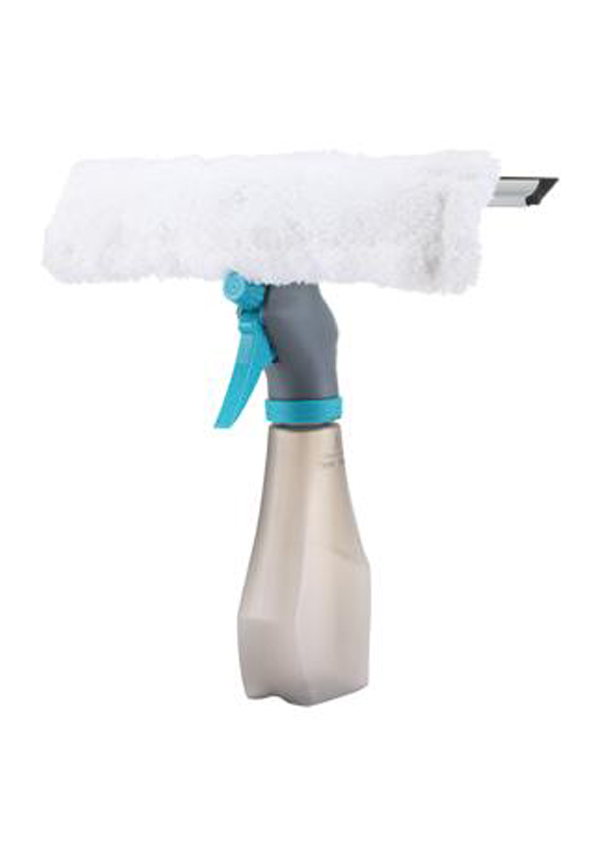 C1 Window Squeegee with Detachable Extension PoleDual-function squeegee for glass and flat surfaces, with extension-pole compatibility for high-reach cleaning and wholesale supply.View Product →
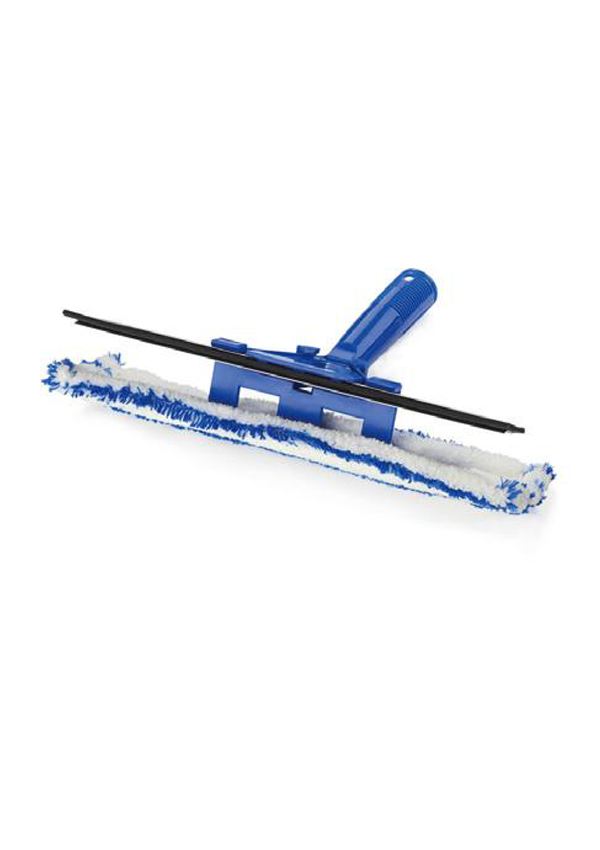 C3 Microfiber Window Combi SqueegeeSqueegee-and-sponge combi for windows, glass doors, tables, countertops, and mirrors, offered in bulk carton packing.View Product →
A Repeatable Method That Works With Almost Any Cleaner
- Dust the frame, sill, and glass first. Loose grit turns a smooth squeegee into a scraper.
- Mix the cleaner in a clean bucket or bottle. Use a measured dilution rather than a splash, especially when several people share the same job.
- Wet the glass with a scrubber or microfiber applicator. Work from the top down and keep the solution moving so it does not dry in the sun.
- Scrub edges and corners with a detail cloth or a soft brush. The squeegee cannot remove soil it never reached.
- Place the squeegee at the top corner and pull across in a smooth stroke, wiping the rubber after each pass. On large panes, use an overlapping “S” pattern or straight lanes with a dry towel at the base.
- Detail the edges and sill with a dry microfiber cloth. This is where most visible streaks begin.
- Check the glass at an angle, not straight on. Raking light shows film and missed edges before the customer does.
Troubleshooting by Symptom
- White haze after the pass: too much soap, dirty solution, hard water, or a dry rubber edge. Rinse with clear water and dry the blade.
- Streaks only at the edges: a nicked rubber corner, a frame that is holding solution, or a stroke that stops before the blade clears the glass.
- Chatter or squeaking: not enough slip, a worn or hardened blade, or glass that is too warm. Reduce the dilution gap and work in shade where possible.
- Rainbow film: an oily cleaner, a wax additive, or contamination from a dirty applicator. Clean the applicator and use a plain glass formula.
- Milky drips on the frame: cleaner that was allowed to dry, or a mix that is too strong for the surface. Wipe the frame promptly and rinse the sill.
Buying Cleaner and Squeegees Together
For a private-label or bulk program, test the cleaner and the squeegee as a system. A formula that performs well with a 70-durometer rubber at room temperature may behave differently with a softer blade, a wider channel, or a hot delivery van. Check compatibility with printed frames, plastic handles, and packaging. A sensible test protocol includes bare glass, tinted film, hard-water residue, and an oily kitchen film, each rated for haze, drying speed, and edge finish.
Buyers often ask for a complete window-cleaning kit rather than a bottle of liquid alone. In that case, the cleaner recommendation should be printed on the label and matched to the applicator, cloth, and squeegee in the pack. If you are assessing a full range, this 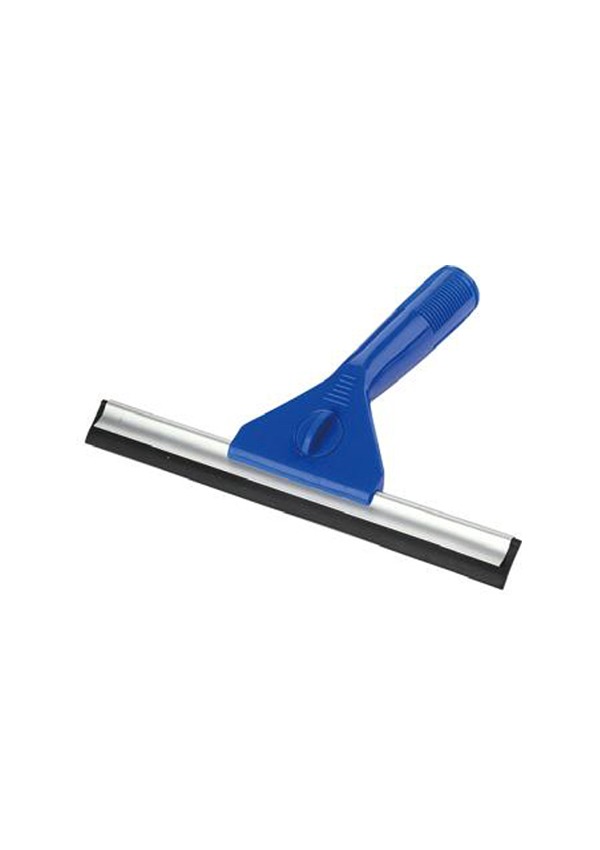 M4 Window Squeegee with Expandable Pole ReachHigh-access glass-cleaning squeegee with detachable telescopic poles and adjustable pivoting head options for skylights and partitions.View Product → belongs in the same review as the solution and the microfiber detail cloth.
The Recommendation I Would Actually Use
Use a low-suds neutral solution for routine glass, mix it weaker than feels satisfying, and keep a professional glass cleaner on hand for oily film and quick touch-ups. Use distilled water if your tap supply leaves spots. Avoid wax-rich, heavily perfumed, or high-foam cleaners with a squeegee, not because they cannot clean, but because they make the blade’s job harder to control. The best window cleaner to use with a squeegee is the one that lets the rubber leave a clean, dry edge in one pass, with no film left behind.