A sourcing manager opens a carton of 30,000 microfiber cleaning cloths, rubs one between thumb and forefinger, and signs off. Eight weeks later the retailer's lab reports the cloths have shrunk 6% in width after ten home washes and leave a visible haze on dark glass. The unit price was excellent. The total cost was not.
Cloth failures almost never start at the sewing machine. They start at four decisions made long before the first stitch: fiber blend, weight per square metre, weave structure and edge finishing. Get those four right and a cloth survives hundreds of wash cycles, lifts grease without detergent and releases soil in the rinse water. Get one wrong and you have an inexpensive cloth that behaves like one — in the end user's hand, in the returns queue, and in the review section.
This article is written for the people who actually write the specification: sourcing managers, product developers, quality engineers, private-label owners and retail buyers. It covers what each number on a cloth spec sheet really controls, where cheap cloths fail, how to test incoming goods, and how to phrase a purchase order so that the shipment you receive matches the sample you approved.
The Short Answer: What Separates a Good Cloth from a Cheap One
If you only remember one thing, remember this: mass alone does not make a good microfiber cleaning cloth. A 300 GSM cloth made from unsplit, round polyester filament performs worse than a 250 GSM cloth made from properly split 80/20 polyester-nylon. Weight tells you how much material is there. Split ratio tells you how well that material works.
Four parameters, in order of impact:
- Split quality and blend ratio. Determines whether the fiber can trap oil and hold water at a capillary level. Unsplit filament is effectively a very fine sponge-less synthetic yarn.
- Weight per square metre (GSM). Determines absorbency volume, hand feel, scrub life and cost.
- Weave structure. Determines lint level, surface contact and how quickly the cloth releases water.
- Edge finish. Determines whether the cloth sheds fibers at the border and whether it survives repeated industrial laundering.
Everything else — colour, size, packaging, logo — is configuration. Important, but configuration. A buyer who negotiates hard on colour and packaging while leaving the blend ratio to the factory's discretion has optimised the wrong variable.
What "Microfiber" Actually Means, and Why Split Fiber Is the Whole Point
The term microfiber refers to filament denier, not to a brand, a weave or a country of origin. In cleaning textiles, it generally means filaments below roughly 1 decitex, and in good quality cloths, well below that after splitting. A human hair is around 60 to 80 microns across; a split microfiber filament is a fraction of that, which is why it can reach into the microscopic ridges of a smooth surface rather than skating over them.
The manufacturing sequence matters more than most buyers realise. Bicomponent fiber — typically a polyester core with a nylon sheath, or the reverse in some constructions — is woven or knitted into greige fabric. The fabric is then treated, often in an alkaline bath, and mechanically agitated so that the two polymers separate along their length. Each original filament becomes a bundle of wedge-shaped filaments with sharp longitudinal edges.
Those wedges do two jobs simultaneously. First, they scrape — the edges lift soil from surfaces without the abrasiveness of a scouring pad. Second, the gaps between them act as capillaries that draw in water and oily soil by surface tension, which is why a good cloth picks up grease from a stainless steel splashback with plain water.
The practical consequence for buyers: if the factory skips or shortens the splitting stage to save cost, the cloth looks and feels plausible but behaves like ordinary polyester. It pushes water around instead of absorbing it. It leaves streaks. And no amount of downstream washing in the consumer's machine will fix it, because splitting is a fiber-level property fixed at the mill.
The Specification Table: What Each Number Controls
The table below is a working reference for a general-purpose cleaning cloth. Ranges shift with application — a glass cloth runs lighter and flatter, a kitchen scouring cloth runs heavier and looped — but the relationships hold.
Typical specification ranges for split microfiber cleaning cloths and the performance each parameter controls.
| Parameter |
Common range |
What it controls |
What to watch for |
| Fiber blend |
80% polyester / 20% nylon; 70/30 for heavier soil |
Oil pickup, water absorption, scrub feel |
Claims of "100% microfiber" with no split; high polyester content reduces water hold |
| Weight (GSM) |
200–400 g/m² |
Absorbency volume, durability, hand feel, cost |
Measured weight drifting below the approved sample by 5–8% |
| Weave / knit |
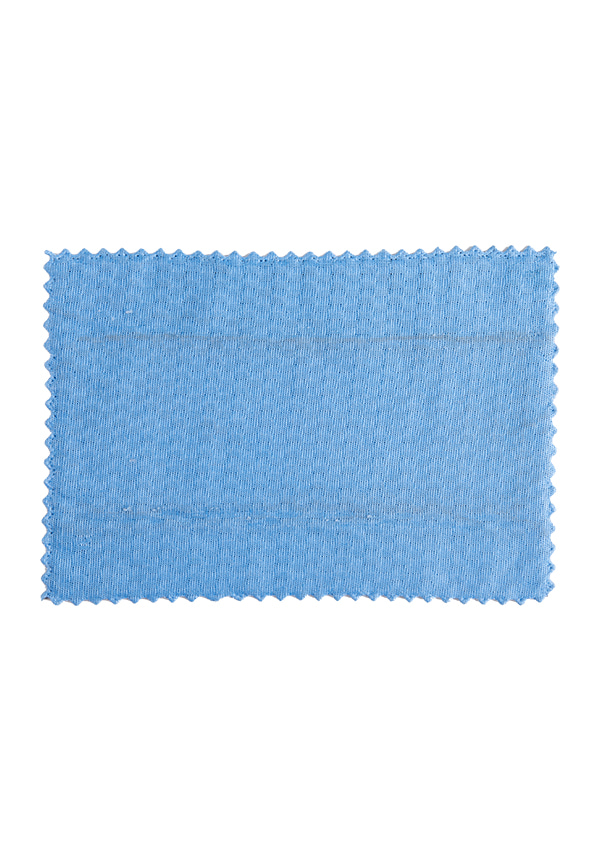
Terry loop, flat (suede), waffle, pearl |
Lint level, surface contact, water release |
Terry sold for glass; flat sold for heavy scrubbing |
| Edge finish |
Overlock, ultrasonic sealed, hot cut, satin band |
Fraying, lint at the border, wash survival |
Overlock thread that shrinks differently from the body |
| Absorption |
5–7× dry weight in water |
Wiping efficiency per pass |
Tested once only; performance drops after 20 washes if the fiber is poor |
| Shrinkage |
Under 5% after 5 washes at 60 °C |
Fit in dispensers, retail pack appearance |
Lengthwise shrinkage exceeding widthwise shrinkage |
| Colourfastness |
Grade 4–5 change, 3–4 staining |
Cross-contamination, colour-coding integrity |
Dark shades bleeding into the laundry load |
| Wash life |
100–300 home washes; 300+ industrial |
Cost per use, brand claims |
Claims made without a documented test protocol |
Two notes on reading this table. First, the ranges are interdependent — a 400 GSM 100% polyester cloth is not a premium product, it is a heavy mediocre one. Second, every number above should be tied to a stated test method in the specification, otherwise it is a marketing adjective rather than a requirement.
GSM in Practice: Matching Weight to the Task
Weight is the easiest specification to check and the easiest to quietly reduce. Buyers should treat GSM as a hard acceptance criterion measured per shipment, not a one-time sample attribute.
200–250 GSM
Light wiping cloths. Suitable for dusting, optical surfaces, screen cleaning and light duty in food service where the cloth is changed frequently. Fast drying, low bulk in the wash, but limited water hold and a shorter scrub life. At this weight, edge finish quality matters disproportionately because the fabric has less mass to hide a fraying border.
250–320 GSM
The working range for general-purpose cloths: kitchens, bathrooms, offices, janitorial carts. This is where most private-label programmes sit because the balance of absorbency, durability and landed cost is easiest to defend. A 280 GSM terry cloth at 80/20 handles spills, wipes greasy surfaces and survives repeated home washing without going bald.
320–400 GSM
Heavy duty: automotive drying, industrial maintenance, commercial kitchen degreasing, glass polishing where a plush surface is wanted. Higher weight means more water held per cloth and fewer cloths consumed per shift, which often justifies the unit price in professional use. It also means longer drying time and higher laundry weight, so a facility washing 2,000 cloths a day should model the drying load, not just the purchase price.
One caution on very high weights marketed as premium: above roughly 400 GSM, absorbency gains flatten while drying time and cost climb. At that point the extra mass is mostly a tactile story, and buyers should ask what it is actually delivering in the customer's application.
Blend Ratio: 80/20, 70/30 and the 100% Polyester Shortcut
The two polymers do different jobs. Polyester is lipophilic — it attracts and holds oils, which is why it lifts fingerprints and grease films. Nylon is hydrophilic and slightly softer, contributing water absorption and a gentler scrub. The conventional 80/20 polyester-nylon blend is a compromise that works across most cleaning tasks.
Raising nylon to 30% produces a cloth with better water uptake and a softer hand, often chosen for glass and delicate surfaces. It costs more, and in some constructions it wears faster under abrasion. Dropping nylon to 10% or going 100% polyester saves money and gives strong oil pickup, but the cloth wrings out harder, feels drier on the surface, and is more prone to scratching on high-gloss finishes if the filament is coarse.
The other blend question is recycled content. Recycled polyester from post-consumer PET is now commercially available in cleaning textiles at a modest premium, and several European retail programmes accept it as a sustainability claim provided the chain of custody is documented. Buyers pursuing recycled content should confirm two things: the percentage is stated on the transaction certificate, and the fiber still splits correctly. Poorly spun recycled filament can produce a cloth that meets the environmental story but fails the performance test.
Whatever the ratio, insist on seeing the mill's fiber specification and, ideally, a microscope image or independent fiber composition test. A two-polymer blend is easy to misrepresent and hard to see by eye.
Weave Structure: Terry, Flat, Waffle and Pearl
Structure decides how the cloth meets the surface, and therefore what job it can honestly be sold for.
Terry loop
Looped pile on one or both faces. High surface area, strong absorbency, good mechanical lift of loose soil. The loops also trap particles, which is helpful during cleaning and less helpful when the cloth sheds during use. Terry is the right choice for general kitchen, bathroom and janitorial work, and the wrong choice for streak-free glass.
Flat or suede finish
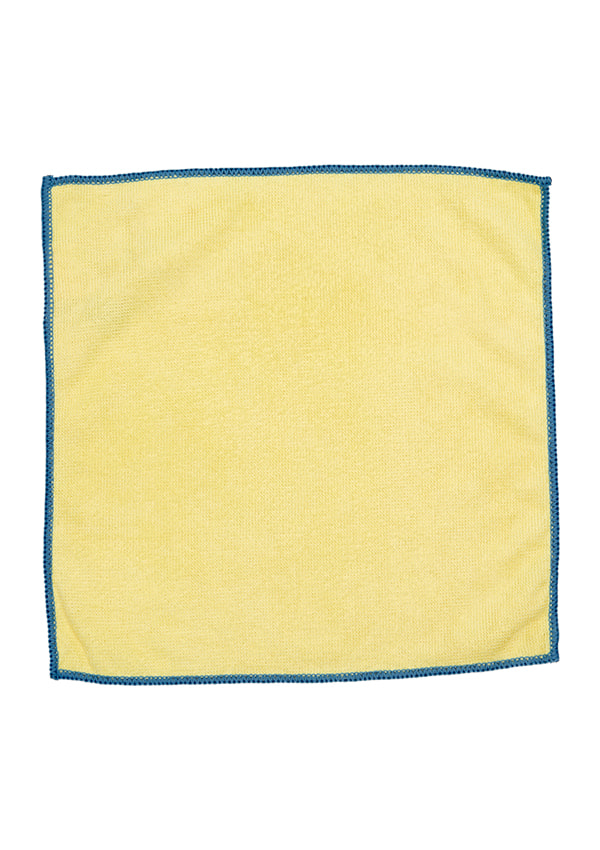
A dense, low-pile surface, often brushed on one side. Very low lint, excellent contact with smooth surfaces, and the standard construction for glass, mirrors, screens and polished stainless. It holds less water than terry per unit weight, so it is used wet-then-buff rather than for soaking up spills.
Waffle
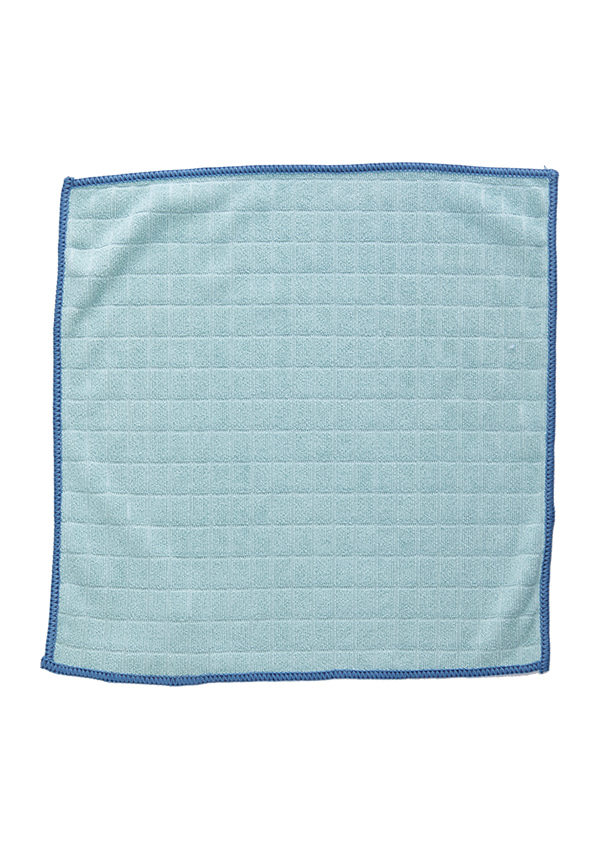
A three-dimensional grid that creates open channels. Fast water uptake and, importantly, fast water release — a waffle cloth wrings out more completely, which suits drying tasks and high-throughput cleaning where cloths cycle quickly. It is less effective at fine polishing because the raised grid does not contact the surface evenly.
Pearl or herringbone
Textured patterns with a tighter, scrubbier face. Useful where mild agitation is wanted without abrasives: sink basins, hobs, tile grout lines. The texture raises the risk of micro-scratching on soft plastics, so it should not be the default cloth for a mixed-surface contract.
Edge Finishing: Where Lint and Early Failure Come From
Walk a production line and you will see why edges deserve their own paragraph. Cutting microfiber releases thousands of loose filaments. How the cut is treated determines whether those filaments stay in the factory or end up on the customer's window.
- Overlock stitching. The most common and lowest-cost finish. Durable if the thread is quality and the tension is right, but the needle perforations create a line of weakness, and a thread that shrinks differently from the body causes the classic wavy, ruffled border after washing.
- Ultrasonic or heat-sealed edge. The filaments are fused at the border with no thread. Very low lint, clean appearance, popular for glass and screen cloths. The trade-off is a slightly stiffer edge and a small risk of a hard fused bead that can catch on a surface if the sealing temperature is poorly controlled.
- Hot-cut. A heated blade cuts and seals in one pass. Cheaper than ultrasonic, adequate on flat weaves, but prone to inconsistent sealing at the corners.
- Satin band or taped edge. A separate binding strip sewn around the perimeter. Gives a premium look and a colour accent for coding, but adds a component that can pucker or wear through first.
For any programme where lint is a specification — glass, automotive, electronics, laboratory — sealed edges should be mandatory, not optional. For heavy janitorial use where abrasion at the border is the failure mode, a well-executed overlock or banded edge often outlasts a thin sealed edge.
Absorbency and Water Release: Two Different Numbers
Suppliers quote absorbency in multiples of dry weight, commonly five to seven times. That figure is useful but incomplete, because a cloth that absorbs well and releases poorly is a cloth that smears. Professional users care about both uptake and wringing behaviour, and the two are controlled by different things — uptake by fiber splitting and capillary structure, release by weave openness and fiber surface treatment.
Practical test methods a buyer can run without a laboratory:
- Drop test. Place a dry cloth flat and drip 0.5 ml of water onto the surface. A properly split cloth wicks it in within a second or two and the wet spot spreads. A poor cloth beads the droplet on the surface.
- Wring test. Wet the cloth fully, wring by hand with consistent effort, and weigh. Record the retained water. Compare against the approved golden sample; a drift here signals a fiber or finishing change even when GSM looks correct.
- Streak test. Wipe a clean black glass panel with a damp cloth, then buff dry with a second one. Inspect under raking light. This single test catches most real-world quality failures faster than any lab report.
- Wash-and-repeat. Run the above after 10, 25 and 50 washes. Performance after washing is what the end user experiences, not performance from the sample bag.
Buyers should record these results against the golden sample and keep them in the specification file. They cost almost nothing and they settle most disputes about silent specification changes.
Durability: Shrinkage, Colourfastness and Wash Life
A cloth that costs 12 cents and survives 30 washes is more expensive than one that costs 20 cents and survives 200. That is the whole argument for specifying durability rather than accepting whatever the factory offers.
Shrinkage. Knitted microfiber relaxes during washing. A reasonable specification is under 5% after five washes at 60 °C, measured on both dimensions. Anything above 8% will visibly distort a retail pack and can make a cloth too small for its stated size claim. The most common root cause is insufficient pre-shrinking or relaxation at the mill, which is a cost the factory carries and sometimes chooses not to.
Colourfastness. Grade 4–5 for colour change and 3–4 for staining multi-fibre adjacent fabric is a defensible baseline for dyed cloths. This matters most in colour-coded systems, where a red cloth that bleeds into a white one destroys the entire hygiene protocol it was bought to support.
Wash life. Home-use claims of 100 to 300 washes are common and usually based on accelerated testing. Industrial laundering is harsher — higher temperatures, stronger chemistry, mechanical action — and a cloth specified for 300 home washes may only deliver 80 to 120 industrial cycles. If the end user is a contract cleaner or a hospital laundry, test to the industrial protocol, not the retail one.
Pilling and fuzzing. Looped cloths can pill at friction points. Rating on a standard pilling scale after 20 washes gives a defensible quality statement and a clear rejection criterion.
Lint, Scratch Risk and Surface Safety
Lint is the most visible defect in the category and the easiest to test, which makes it a useful screening tool for the rest of the specification. Lint comes from three places: loose filaments left by a poor cut, short fibers working out of a loosely spun yarn, and broken filaments from excessive mechanical action in the mill.
Scratch risk is subtler and more expensive to get wrong. Microfiber is generally safe on glass, stainless steel, ceramic and most cured lacquers, but it is not universally safe. Three surfaces deserve caution:
- Anti-reflective and coated optical surfaces, where embedded grit in a reused cloth can abrade the coating.
- High-gloss black plastics used in automotive interiors and appliance fascias, where even soft fiber plus dust particles leave fine marks.
- Oiled or waxed timber, where the cloth's oil-lifting action removes the finish as well as the dirt.
The practical answer is not to promise universality. It is to state clearly on the pack which surfaces the cloth is intended for, and to test the specific cloth on the specific finish before the claim goes to print. A brand that says "safe on coated screens" and is wrong carries a liability that dwarfs the margin on the order.
Colour Coding and Cross-Contamination Control
In food service, healthcare and contract cleaning, colour is a functional specification rather than a decorative one. A four-colour system — commonly red, blue, green and yellow — separates high-risk areas from low-risk ones and is embedded in most hygiene management schemes. The cloth's job is to make that system visible and enforceable.
Design implications follow directly:
- Colours must be dyed to a tight tolerance so that a blue from one production lot matches a blue from the next, otherwise the scheme loses credibility on the shelf.
- Fastness must hold through industrial laundering, including chlorine and oxygen bleach where used.
- If the cloth carries a printed label or heat transfer, that marking must survive the same number of washes as the cloth, or the coding becomes unreadable long before the cloth wears out.
- Sizes and formats should differ by colour where possible, giving users a second cue that works even in poor light.
For healthcare and food manufacturing customers, buyers should also expect documentation: fibre composition, dye compliance, and where relevant a statement on substances of concern. A colour-coded cloth without paperwork is a colour-coded cloth that an auditor can reject.
Sizes, Formats and Pack Configurations
Standard retail sizes cluster around 30 × 30 cm and 40 × 40 cm, with 16 × 16 inch equivalents for North American programmes. Professional formats run larger — 40 × 60 cm and 50 × 70 cm — because a bigger cloth covers more surface per pass and reduces the count used per shift.
Beyond the flat cloth, the category includes:
- Perforated rolls for food service and clinical environments, where a controlled, single-use-per-task portion is preferred even though the material is reusable.
- Multi-packs of 3, 5, 8 or 12 pieces, frequently colour-assorted, which carry a lower unit cost for the consumer and a higher basket value for the retailer.
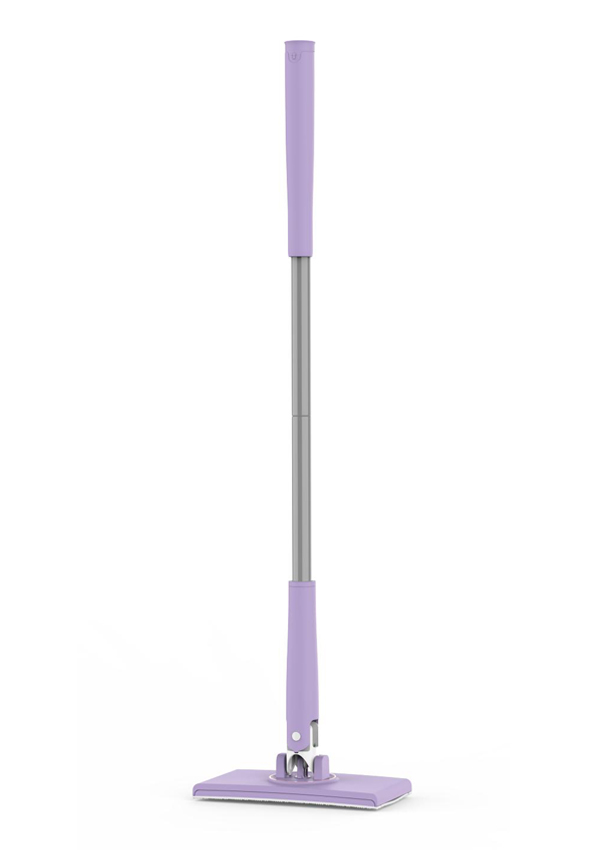
- Kits combining a glass cloth with a squeegee or a flat mop pad, which are natural cross-sell configurations for a cleaning tools supplier.
- Microfiber cloths cut for mop heads, where the cloth is a consumable rather than a standalone product.
Pack format decisions affect cost more than most buyers expect. A folded cloth in a printed header card with a euro slot is a different cost structure from a polybag with a sticker, and both differ from a shrink-wrapped three-pack in a display-ready tray. Deciding the pack before finalising the cloth weight is the right sequence; deciding it afterwards usually means renegotiating the price.
Care and Laundering: The Reason Cloths Die Early
Most premature cloth failure in the field is not manufacturing failure. It is laundering failure, and it is entirely preventable with instructions that users actually read.
The three common mistakes:
- Fabric softener. Softener deposits a film on the fiber that blocks the capillaries. The cloth feels lovely and stops absorbing. This is the single most common cause of "these cloths stopped working" complaints.
- Overdosing chlorine bleach. Hypochlorite attacks polyamide. Repeated exposure yellows the cloth, weakens the filament and shortens life dramatically. Where disinfection is required, oxygen-based systems and thermal disinfection are gentler.
- Overloading and high heat drying. Excessive mechanical action in an overloaded drum accelerates pilling and edge wear; very high tumble drying temperatures can set wrinkles and, on heat-sealed edges, distort the seal.
A practical care instruction for the pack is short enough to print: machine wash up to 60 °C with a mild detergent, no fabric softener, no chlorine bleach, tumble dry low or air dry, and wash separately from linting fabrics the first two or three times. That single panel of text prevents a measurable share of warranty and returns claims. For a deeper walkthrough of wash routines and everyday uses, this site's guide to microfiber cloth uses and care covers the consumer-facing side in more detail.
Writing a Purchase Order That Protects You
The gap between an approved sample and a delivered container is where margin disappears. The purchase order is the only document that closes that gap, and it should carry the specification rather than referencing a conversation.
A defensible cloth PO includes:
- Full fiber composition with tolerance, e.g. 80% polyester / 20% nylon, ±3 percentage points, verified by fiber composition test on request.
- Weight as GSM with a minimum acceptable value and a stated test method, sampled by die-cutting a known area and weighing conditioned fabric.
- Construction details — weave type, pile height where relevant, face count, and whether the back is brushed.
- Dimensions in centimetres with tolerance, plus post-wash dimensions after five washes.
- Colour to an approved standard with a stated colour-difference limit, and fastness grades to a named standard.
- Edge finish described by type, stitch density for overlook, and a lint acceptance test.
- Labels and packaging with artwork reference, barcode verification, carton dimensions, gross weight and a packing list format.
- Inspection standard — AQL 2.5 for major defects and 4.0 for minor is a common working basis for this category, applied to a stated sample size.
- Golden sample custody — signed, dated, retained by both parties, and referenced as the arbitration reference.
- Change notification clause requiring written approval before any change to fiber, mill, weight, dye or edge process.
Item ten is the one buyers most often omit and most often need. Silent substitution of one mill's fabric for another is the origin of most quality disputes in this category.
Incoming Inspection and the Defects That Actually Matter
A 20-minute inspection on arrival catches the problems that generate claims later. The table below lists the defects worth screening for, with their typical root causes.
Common microfiber cleaning cloth defects, their visible symptoms and the process step most likely responsible.
| Defect |
How it appears |
Likely root cause |
Prevention |
| Underweight fabric |
Cloth feels thin; die-cut weight below spec |
Mill substitution or GSM reduced to hit a price |
Weight check per lot; contract clause on composition |
| Poor absorbency |
Water beads on surface; streaks when wiping |
Incomplete fiber splitting or softener residue |
Drop test and post-wash drop test on golden sample |
| Edge fraying |
Loose filaments at border after one wash |
Blunt cutting blade, weak sealing temperature, low stitch density |
Wash five cycles before approving; specify stitch density |
| Excess lint |
Haze left on dark glass |
Short fibers in yarn, rough cut, low twist |
Black glass test; sealed edge for lint-critical products |
| Shrinkage |
Square cloth becomes rectangular |
Insufficient relaxation at finishing |
Specify post-wash dimensions, not only greige dimensions |
| Colour bleeding |
Dye transfer in wash or on the surface |
Inadequate dye fixation, cheap dyestuff |
Fastness grades in the PO; wash test per colour |
| Size variance |
Mixed dimensions within a carton |
Manual cutting without a template check |
Dimensional AQL sample per carton; template verification |
| Label or print failure |
Marking unreadable after washing |
Incompatible ink or transfer film |
Wash-test printed samples before production release |
Inspection frequency should follow risk, not habit. A new mill, a new colour or a new edge process justifies tightened sampling for the first two shipments; a stable supplier with a clean eighteen-month record justifies reduced sampling with periodic full audits.
OEM and Private Label: What the Factory Side Looks Like
For a brand or retailer, the practical question is not whether a supplier can make a cloth, but whether it can hold a specification across repeated orders, seasonal colour changes, packaging revisions and retail compliance requirements.
Capability that matters in this category:
- In-house fabric sourcing relationships with mills that can document fiber composition and splitting quality.
- Cutting, sewing and sealing equipment under one roof or under direct control, since most edge defects originate at the cut-and-seal stage.
- In-house moulding and tooling, which becomes relevant the moment the cloth is bundled with a mop head, a bucket, a squeegee or a brush — the typical direction of travel for private-label cleaning programmes.
- Documented quality systems and social compliance, because retail onboarding now routinely requires factory audits, and certificate packs are requested before a purchase order is issued.
- Packaging engineering for header cards, display trays and multi-language artwork, which is where most launch delays happen.
A manufacturer that also produces the mop, the duster and the squeegee can align cloth GSM and colour with the rest of a cleaning range, which is exactly the kind of consistency a category buyer wants across a shelf set.
Cost Per Wash Beats Price Per Piece
Procurement teams under pressure negotiate the unit price. The number that determines profitability is cost per use, and it moves in ways that unit price hides.
Consider two options for a 300-cloth-per-day operation. Option A costs 0.15 per unit and lasts 60 washes; option B costs 0.22 and lasts 180 washes. Per wash, A costs 0.0025 and B costs 0.0012 — B is roughly half the cost despite being nearly 50% more expensive per piece. Add the labour saved by replacing cloths a third as often, and the gap widens further.
Three levers move cost per wash more than price negotiation:
- Higher GSM within a sensible band, which extends usable life and reduces the number of cloths consumed per shift.
- Correct laundering, which alone can double or halve service life depending on whether softener and chlorine are controlled.
- Edge quality, because border failure is the first thing to retire an otherwise sound cloth.
Retail buyers have a parallel calculation. A consumer who uses a cloth 40 times and throws it away because it stopped absorbing is a lost repeat purchase. A consumer who uses it 200 times and buys the same pack again is the actual business model for a reusable cloth programme.
Sustainability: Reusable Versus Disposable, and the Shedding Question
The environmental case for reusable microfiber is real but should be stated precisely. A cloth used two hundred times replaces a very large number of disposable wipes, and its manufacturing impact is amortised across those uses. That is the core argument, and it holds as long as the cloth actually reaches its intended service life — which returns us to GSM, edge quality and laundering.
Two honest caveats belong in any credible claim.
Shedding. Synthetic textiles release microfibers during washing, and wastewater treatment does not capture all of them. This is a genuine issue for the entire synthetic textile sector, not unique to cleaning cloths. Responsible options include recommending wash bags or filters, designing fabrics with lower shedding, and supporting filtration pilots rather than denying the mechanism.
Recycled content. Post-consumer recycled polyester is available and workable, but buyers should require certification rather than accepting a logo. The performance specification must be met by the recycled version, not waived in its favour.
On packaging, the low-cost improvements are usually straightforward: replace polybags with paper bands where the product allows, right-size cartons to reduce empty volume, print care instructions that keep the cloth in service longer, and design the pack so it can carry a clear reuse message without adding a second printed component.
Choosing the Right Cloth for Each Job
The category is broad, but a shelf set rarely needs more than four or five cloths to cover the realistic jobs in a home or a facility.
- General purpose 280–320 GSM terry, 80/20. Kitchens, bathrooms, general wiping. The volume product in most ranges.
- Glass and polish 250–300 GSM flat weave, sealed edge. Windows, mirrors, screens, stainless. Sold with a squeegee or as a two-cloth pack.
- Kitchen degreasing 300–350 GSM, 80/20, slightly textured face. Hobs, extractor hoods, splashbacks, worktops.
- Heavy duty 350–400 GSM, 70/30 or high-pile terry. Automotive drying, workshops, industrial maintenance.
- Colour-coded janitorial cloths. Same body as the general-purpose cloth, four dyed colours, fastness specified for industrial laundering.
Buyers who start from the job rather than from the price list usually end up with a smaller, better-performing range — fewer SKUs, clearer claims on pack, and fewer customer complaints. Manufacturers benefit from the same discipline, because a well-defined range is easier to hold to specification across repeat orders. The full microfiber cleaning cloth range on this site illustrates how those variants sit alongside each other, from all-purpose cloths to kitchen cloths and household cleaning towels.
Final Note: Specify, Then Verify
A microfiber cleaning cloth is a simple product made from four consequential decisions: fiber blend and splitting, weight per square metre, weave structure and edge finish. Everything else is configuration. Buyers who treat those four as negotiable in the name of unit price are not buying a cheaper cloth; they are buying a shorter service life, a higher return rate and a claim they will eventually have to withdraw.
The discipline is not complicated. Approve a golden sample with documented test results. Write the specification into the purchase order with tolerances and test methods. Run a twenty-minute incoming check on weight, absorbency and lint. Require written notification of any process change. Do those four things and the carton that arrives in week eight behaves the way the sample did in week one — which is, ultimately, the only performance claim that matters.