If you want a direct answer: the best duster for removing dust in 2026 is a microfiber duster with an extendable or telescopic handle and a washable, refillable head. Microfiber outperforms feather, lambswool, cotton, and disposable sheet dusters in every meaningful test of dust capture, retention, and durability. This conclusion is not based on marketing claims. It comes from more than 31 years of manufacturing cleaning tools for global brands and retail chains, where product quality is measured by repeatable performance under real household and professional cleaning conditions.
Dust management is not a single-surface problem. A thick dust layer on a ceiling fan behaves differently from the fine film that collects on a computer monitor. The question "what is the best duster" therefore has three answers depending on your goal: the best material, the best handle configuration, and the best system for your specific application. This guide addresses all three dimensions, so you can make a confident purchase for your home, or decide which duster design to stock or develop if you are a retailer or brand owner.
Why Dust Is So Difficult to Remove
Dust is not a single substance. Household dust is a mixture of shed skin cells, fabric fibers, pollen, mineral particles, insect fragments, and fine soil. The majority of particles are under 10 micrometers in diameter, which means they are too small to be seen individually and flow with the air rather than behaving like coarse sand.
When you wipe a dusty shelf with a dry cotton cloth, the fiber is too thick to reach into the pores and crevices of the dust layer. The cloth pushes the particles across the surface, creating small aggregates. Some of these fall to the floor or become airborne, but the larger portion is simply compressed into an even film. Many people interpret this as "dust comes back immediately" and conclude that dusting is a futile task. The reality is that dust was never really removed in the first place.
Scientific testing of cleaning tools shows that successful dust removal depends on four variables: fiber size, fiber geometry, total contact surface area, and electrostatic charge. The best dusters are engineered to optimize all four.
The Four Mechanical Actions of a Duster
Sweeping. The duster must dislodge dust from the surface. Coarse bristles do this efficiently but create air turbulence that sends fine particles airborne. The fine, supple fibers of a microfiber head sweep with minimal air disturbance while maintaining full contact with the surface.
Capturing. Once dislodged, the dust particle must transfer to the cleaning head. Synthetic polymer fibers hold a static charge that attract dust. Natural fibers such as lambswool also generate static electricity but lose it quickly in humid conditions, which is why wool dusters fail in bathrooms and coastal climates.
Trapping. The dust must remain inside the head rather than being redeposited on the next surface. Split microfiber creates microscopic wedge-shaped channels that trap particles as small as 3 micrometers. Cotton or wool can hold particles no smaller than 20 to 25 micrometers, which means the finest and most health-relevant particles simply settle back onto furniture.
Releasing. The dust must eventually be removed from the head so the tool can be reused. Washable microfiber heads release dust easily in a sink or washing machine. Disposable systems avoid the wash step but create an ongoing consumable cost and environmental burden.
Duster Materials Compared: Capture, Retention, and Durability
To understand why microfiber dominates the modern duster market, let us compare the common materials side by side. The ratings below are based on comparative evaluations performed in our product testing facilities, where identical dust loads were applied to standard surfaces and cleaning heads were judged using the same controlled protocol.
Comparison of Duster Head Materials in Controlled Dust Capture Tests
| Material |
Capture Rate |
Retention |
Washable |
Durability |
Primary Use |
| Split microfiber |
Excellent |
Excellent |
Yes |
300+ washes |
All-purpose dusting in every room |
| Feather (ostrich, goose) |
Fair |
Poor |
No |
Fragile |
Light touch-up on decorative objects only |
| Lambswool |
Good |
Fair |
Limited |
Moderate |
Bookshelves and carved furniture in dry rooms |
| Cotton |
Poor |
Poor |
Yes |
Moderate |
Wet dusting with polish or spray only |
| Electrostatic disposable sheets |
Good |
Good |
No |
Single use |
Quick jobs on glossy surfaces, disposed after use |
| Plastic bristles |
Good |
Fair |
Yes |
High |
Heat vents, ceiling fans, car interiors with heavy dust |
The test results consistently confirm one trend: split microfiber ranks first in capture, retention, and washability. It is why every major OEM retail program we have produced over the past several years has requested a microfiber duster as the core product line, with feather, wool, and bristle tools relegated to niche applications.
Independent testing has also shown that microfiber dusters can outperform feather dusters, rags, and compressed air alternatives when measured by the amount of dust that remains on the surface after a single pass. The difference is especially noticeable with fine particulate that is most likely to trigger allergies.
Microfiber Dusters: The Technical Detail Behind the Performance
Microfiber is not one material but a category of synthetic fibers. Most dusters use a blend of polyester and polyamide, which are split during the manufacturing process into microscopic filament wedges. The split structure is what gives microfiber its cleaning advantage: each fiber becomes dense with tiny edges that catch dust, instead of being a smooth round thread.
Several technical parameters govern how well a microfiber duster performs:
- Fiber blend: An 80/20 polyester-polyamide ratio is the industry standard because it balances static charge generation, moisture handling, and mechanical durability. Higher polyamide content increases softness but reduces structure; higher polyester increases abrasion resistance but lowers water absorption.
- Fiber denier: Denier is a measure of fiber coarseness. Duster-grade split microfiber typically ranges from 0.1 to 0.5 denier. Lower denier means finer fibers, more filaments per kilogram, and a larger effective surface area for dust contact.
- Fiber density: The number of filaments per square centimetre determines the actual contact points with the surface. A well-constructed microfiber head delivers hundreds of thousands of contact points per square metre.
- Bonding quality: The fibers must be durably bonded to the base fabric. A poor bond allows fibers to shed after a few washes, degrading performance and leaving lint on furniture.
- Moisture retention: A good microfiber duster handles both dry dusting and damp dusting. The fiber structure draws water into the capillary spaces between filaments, which is useful for greasy kitchen cabinets and sticky residues.
Not all microfiber dusters are equal. During OEM development, we frequently receive low-grade samples where the split ratio is poorly controlled. These products feel soft in the store but lose performance after a couple of washing cycles. When you source a duster, ask the manufacturer for split fiber percentage data and fiber uniformity documentation, not just a photo of the product.
In the premium segment, microfiber feather dusters combine the gentle touch of traditional feathers with the trapping power of engineered microfibers. They are an ideal choice for decorative objects, screen frames, and surfaces where a coarse head would scratch the finish.
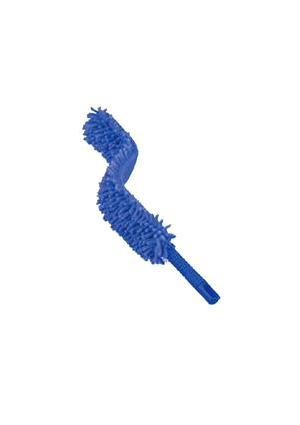 Q5 Microfiber Feather Duster with Dual Handle OptionsThis dusting tool features both a short handle for precise tasks and a telescopic handle up to 175 cm for reaching high areas without a ladder. Its chenille or coral fleece heads capture dust electrostatically, making it a versatile choice for sensitive surfaces.View Product →
Handle Design: The Forgotten Half of a Good Duster
Dusting surfaces that sit above arm's reach, such as ceiling fans, crown moldings, or the tops of cabinets, introduces a specific problem. If a duster requires you to climb a ladder with a tool in hand, you have both a balance risk and an ergonomic penalty. This is why handle design is as critical as cleaning head material.
Three handle properties determine the practical effectiveness of a duster:
- Extension length: A telescopic handle that reaches from 1.2 to 1.8 metres allows an average-height person to clean high ceilings without a step stool. For a commercial space with a high ceiling, 1.8 metres is the standard safe operating length.
- Articulation: A duster head that pivots 90 degrees or more lets you clean the top of a fan blade without reaching overhead. The ability to lock the angle is essential for consistent pressure across the entire surface.
- Weight balance: A fully extended duster should stay under 500 grams. Every extra 100 grams increases fatigue noticeably for professional cleaners who perform dusting for hours in a day.
Handle material also matters. Aluminum handles are lightweight and economical, while stainless steel offers greater durability in humid environments. A rubberized grip reduces slippage when hands are damp, which is common during bathroom dusting. The tightening mechanism for the extension should be a cam lock or screw lock rather than a simple friction fit, because friction mechanisms loosen after a few months of use.
A multifunctional dusting duster with an extendable handle and interchangeable head offers the widest coverage, allowing one tool to replace several specialty products. For a household or professional cleaning kit, this versatility saves both storage space and cost.
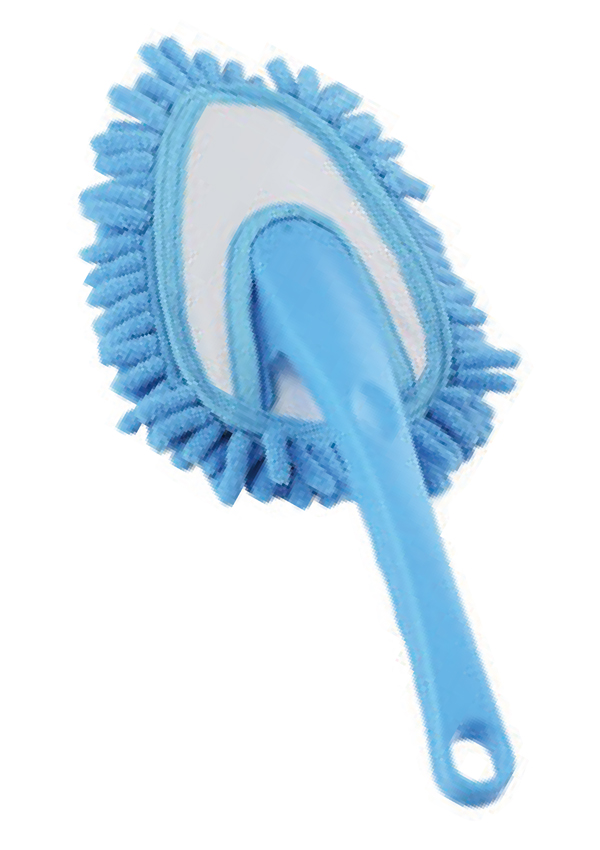 Q7 Microfiber Multi-Functional Dusting DusterDesigned for maximum versatility, this duster offers interchangeable short and long handles, along with chenille or coral fleece heads that use static adsorption to trap fine particles. It suits allergy-sensitive environments and delicate surfaces, helping replace multiple specialty tools.View Product →
Refillable Duster Heads versus Disposable Sheets
The duster market is broadly divided into two approaches: refillable heads and disposable refill sheets. Both have valid applications, but the math strongly favors refillable systems for most users.
Disposable sheets are sold for convenience. You use the sheet, throw it away, and the next sheet is fresh. No rinsing, no drying. The downside is the recurring expense. If a household uses one disposable sheet per week, that is roughly 52 sheets per year. At typical retail pricing, the annual cost of sheets easily exceeds the original handle price within a few months. For a professional cleaning service, the cost compounds across multiple rooms and work teams.
Disposable sheets also require a continuous manufacturing and shipping chain. In our OEM work, buyers increasingly ask for reusable systems because they simplify inventory management and reduce exposure to spikes in raw material prices.
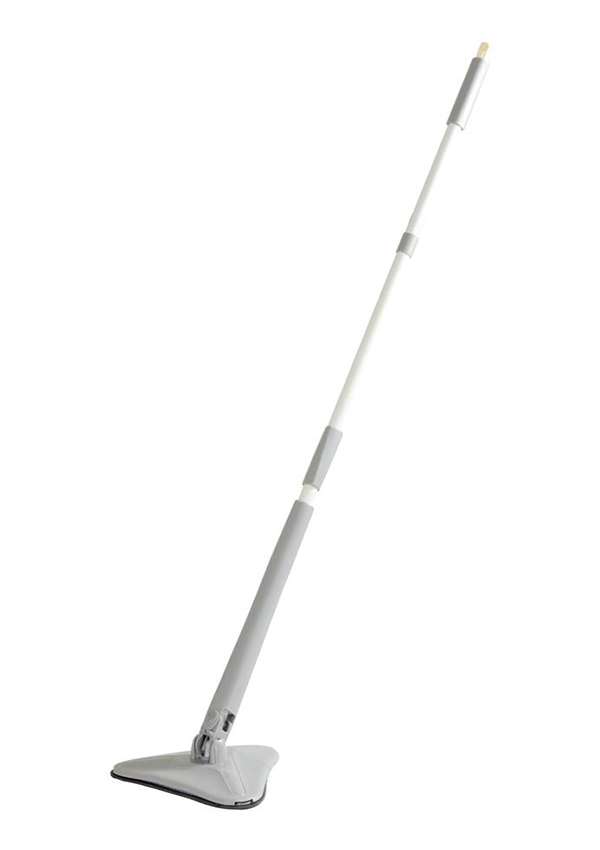
Refillable duster heads offer a different value proposition. A washable microfiber head stays in service for hundreds of cleaning sessions. It can be laundered, dried, and reinstalled on the same handle. A folding magic duster with refill heads is a prime example: the head folds into a compact shape for storage, and the replaceable refill mechanism keeps the product working at peak performance for years instead of weeks.
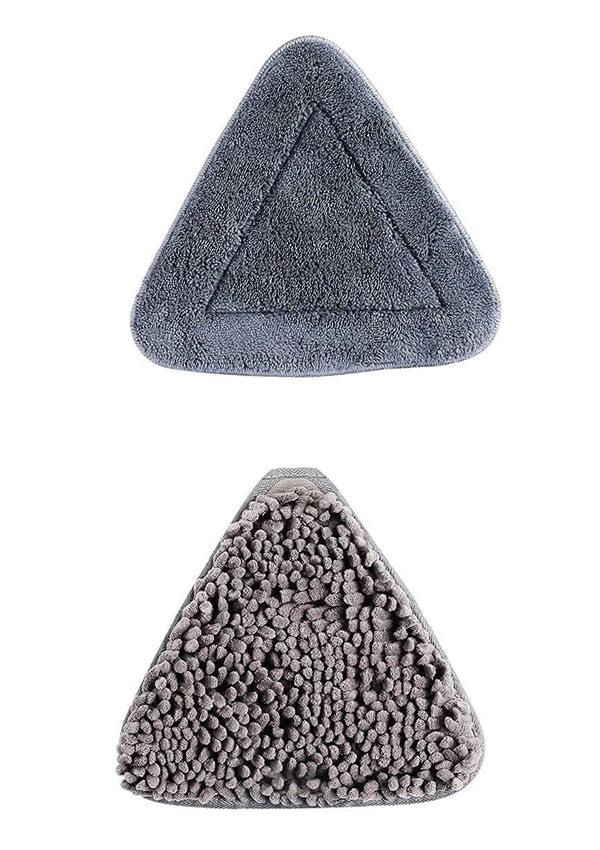 S1 Folding Magic Duster with Washable Refill HeadWith a foldable triangular head, this duster reaches corners and narrow spaces easily. Its washable refill head can be reused for hundreds of cleanings, reducing waste and ensuring long-term performance—an eco-friendly choice for homes, offices, and cars.View Product →
The environmental case is also strong. Each reusable microfiber head replaces roughly 52 disposable sheets per year. Over a lifespan of 300 washes, one washable head prevents more than 300 disposable sheets from entering the waste stream. For retail buyers, this is a compelling sustainability narrative that can be printed directly on packaging.
Matching the Duster to the Surface You Need to Clean
No single duster perfectly cleans every surface. The following recommendations are based on practical experience from our manufacturing and testing operations. When you match the tool to the surface and use the right technique, an afternoon of dusting becomes faster and more effective.
Recommended Duster Type and Technique for Common Household Surfaces
| Surface |
Recommended Duster |
Best Technique |
| Television screens and monitors |
Microfiber dusting cloth or soft microfiber head, used dry |
Light strokes in one direction only, never spray directly on the screen |
| Bookshelves and decorative objects |
Microfiber feather duster with a handle |
Work from top shelf downward so dust does not fall on lower surfaces |
| Ceiling fans and light fixtures |
Extendable duster with a bendable head |
Clean the leading edge of each blade in one pass, then lift and hold the dust away from the face |
| Blinds and window shutters |
Shaped microfiber duster or shutter duster |
Slide the head edge-on between the slats to capture dust on both sides |
| Car interior dashboard |
Compact microfiber mini duster |
Use short, low-pressure strokes to avoid lifting the air vents |
| Under appliances and baseboards |
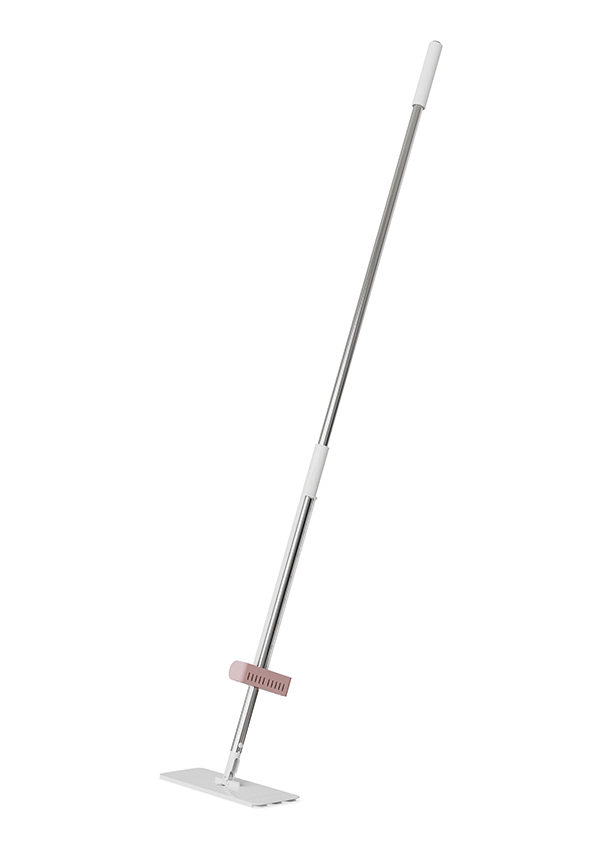
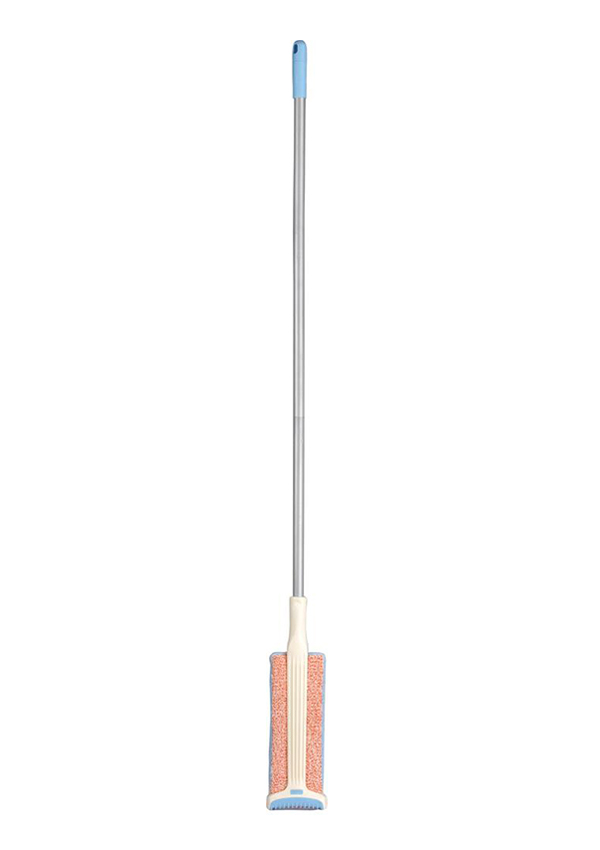
Flat duster on a long thin handle |
Push in a single pass, then lift without dragging back over the floor |
| Cabinets with grease film |
Slightly damp microfiber head |
Wipe with the grain of the finish, then dry with a clean microfiber cloth |
In our standard cleaning test, a correctly matched duster removes about 85% of visible dust during the first pass. A mismatched duster needs two or three passes and redistributes a portion of the dust in the process. For most homes, the most practical setup is a long-handled extendable duster for high and difficult-to-reach surfaces, plus a handheld microfiber duster for electronics and small objects.
How to Use a Duster Correctly: Technique Matters More Than the Tool
Even a premium duster can underperform if the technique is poor. The following rules are based on observations from our cleaning performance testing team, which has evaluated hundreds of everyday users across multiple countries.
Start dry. Many people make the mistake of applying polish to the surface before dusting. Spray polish makes the dust layer sticky, so the duster only smears the dust across the surface without lifting it. For damp dusting, moisten the duster head itself rather than the furniture surface.
Keep strokes short. Short strokes keep the whole cleaning head in contact with the surface throughout the motion. Long sweeping strokes press only the leading edge of the head into the surface, cutting capture efficiency roughly in half.
Work from top to bottom. Begin at the highest point in the room and dust downward. This prevents dust dislodged from upper surfaces from settling on surfaces you have already cleaned. It also prevents you from reaching over a just-cleaned shelf.
Lift the head away after each stroke. Dragging the duster back across the surface redistributes collected dust. Lift the head slightly angled away from the direction of the last stroke to keep the dust on the cleaning head.
Clean the head frequently. A duster head does not have to be visibly dirty to be saturated. Electrostatic capture drops sharply once the fiber surface is loaded with fine particles. If you notice a residue being left behind, wash or replace the head before continuing.
Caring for Your Duster: Making It Last for Years
A microfiber duster is an investment. With proper care, the same head can serve for hundreds of dusting sessions. The care process is straightforward, but a few common mistakes can ruin the product quickly.
Wash the head in warm water with a mild detergent. Do not use fabric softener. Softeners coat the split fibers and neutralize their static charge, which destroys dust capture performance. A standard microfiber head can survive 300 washes without softener, while a single exposure to softener reduces its effectiveness dramatically.
Air dry or tumble dry on low heat. High heat melts and flattens the synthetic fibers, permanently reducing the split-fiber geometry that makes microfiber work. A low-heat tumble dry is safe, as is air drying.
Remove the head from the handle before washing. This prevents water from entering the telescopic mechanism and the metal tubing, which can cause rust and sticking over time. Wipe the handle with a damp cloth and dry it before reassembly.
Store the duster in a clean, dry place sealed from dust. A wall-mounted hook or storage holder helps the head retain its shape and prevents damage from being crushed by other cleaning tools.
Specialty Dusters for Specific Situations
Beyond the general-purpose duster, several specialty models solve problems that standard dusters cannot address well.
Shutter Dusters
Dusters designed specifically for window shutters and blinds have a shaped head that matches the slat spacing. A shutter duster, often a microfiber tool with a central slot, slides through the gap and captures dust from both adjacent surfaces in a single pass. This dramatically reduces the time needed to clean a full window's worth of blinds.
Compact Mini Dusters
Compact mini dusters are sized for small spaces: car interiors, keyboards, desktop accessories, and decorative objects. Their reduced head width provides access to areas that large dusters cannot reach. A mini duster is also a good starter tool for children and adults who clean frequent small surfaces.
Under-Appliance Dusters
A duster with a flat head mounted on a long, thin handle can slide under refrigerators, washing machines, and dressers. This design allows users to extract dust, lint, and pet hair without moving heavy furniture, which is both time-saving and safer than trying to lift appliances.
Foldable Magic Dusters
Folding magic dusters use a zigzag pleated microfiber head that expands to expose a large cleaning area, then collapses into a compact size for storage. The pleats hold dust better than a flat head because they create multiple contact surfaces in a single stroke. Foldable designs also fit neatly in a small cabinet or drawer.
What Does Dusting Cost per Year? A Real Comparison
One of the most practical ways to choose a duster is to compare the total annual cost. The following calculation is based on reasonable usage assumptions for an average household that dusts once a week.
Annual Cost Estimate: Refillable Microfiber Duster vs. Disposable Sheet Duster
| Item |
Refillable Microfiber System |
Disposable Sheet System |
| Initial purchase |
$14.99 |
$9.99 |
| Consumables per year |
None (head is washed) |
$60.00 (52 sheets at typical retail price) |
| Replacement head per 2 years |
$5.00 |
N/A |
| Annual average cost |
Approximately $10 |
Approximately $70 |
| Lifetime after 5 years |
Approximately $50 |
Approximately $350 |
The figures show that a refillable microfiber duster is significantly cheaper after the first year of use. The disposable system is lower cost at the point of sale, but the recurring purchase of sheets turns a small household tool into a long-term spending stream. For a professional cleaning company that uses dusters daily, the difference is multiplied by the number of staff and cleaning jobs.
Choosing a Duster for Retail or OEM Development
If you are involved in brand management, retail buying, or product development, the question "what is the best duster" becomes far more technical. You need to choose a duster model that matches your market positioning, target price, and expected performance. Despite the growth of consumer cleaning brands, most dusters sold through retail channels are still manufactured by specialized OEM factories, which is exactly the context in which this guide was developed.
For a value-oriented retail program, a basic extendable microfiber duster with a fixed handle and renewable head is a sensible SKU. It delivers sufficient performance at a low price point and gives the retailer a clear talking point against disposable brands.
For a premium program, a duster with an articulated head, a telescopic handle, and a larger footprint creates a differentiated customer experience. The higher retail price is justified by the improved reach and capture performance. A premium model can also feature a storage bracket, which users perceive as a value addition.
In the middle segment, a compact duster with a smaller handle and a detachable head fits urban apartments and home offices where storage space is limited. This is a growing segment in densely populated cities.
Population density affects dust accumulation. In high-rise apartments, air movement from windows and ventilation systems brings more outdoor particles into the home. Retailers in urban markets should provide dusters capable of frequent deep cleaning, while suburban stores can stock lower-cost entry models without losing customer satisfaction.
When evaluating a potential OEM partner for dusters, inspect the following performance data:
- Split fiber percentage: The manufacturer should provide a microscopic image of a cross-section showing the split structure.
- Wash endurance test results: A head that degrades after 20 washes is unsuitable for retail, no matter how attractive the packaging.
- Handle lock strength: The extension mechanism should survive a 1,000-cycle extension/retraction test without loosening.
- Head attachment force: The replaceable head should attach with moderate effort, stay secure under normal dusting pressure, and be removable without special tools.
- Fabric weight: The actual gsm (grams per square meter) of the microfiber fabric should meet the specification. Cheaper fabric reduces dust capture and wash durability.
- Color fastness: The fabric must not release dye after washing, especially in refillable heads that can be laundered repeatedly.
- Packaging protection: Dust arrives during shipping, and a duster head exposed to a dusty warehouse will perform poorly in a customer's home. Hooded or sealed retail packaging is a requirement, not a luxury.
These are the criteria we use during our own internal pre-production audits. They are also the same checks that experienced procurement teams at global retailers apply before approving a duster sample for mass production.
Common Duster Mistakes and How to Avoid Them
Over the years, we have observed that certain mistakes appear across almost every market. Awareness of these patterns helps consumers and buyers make better product decisions.
Mistake one: using a feather duster on a seriously dusty surface. Feather dusters were never designed to remove dust. They were designed to gently brush loose specks from antique items without touching the finish. They move dust from one area to another rather than picking it up. In any room with noticeable dust accumulation, a feather duster makes the task harder, not easier.
Mistake two: using the same cleaning head on the floor and on furniture. Floor dust contains abrasive sand and fine grit. If that head is then used on shelf tops or electronics, the abrasive particles scratch the finish and can damage a screen. Keep separate heads for floor and elevated surfaces.
Mistake three: storing a duster near a furnace vent or heater. The air blast carries dust directly onto the clean head. Before you know it, you are using a duster that is already saturated with fine particles. Store the head in a sealed bag or a closed cupboard.
Mistake four: assuming a damp duster cannot capture dust. A slightly damp microfiber head actually captures dust better on greasy surfaces because the moisture makes the fibers stickier. The trick is to keep the head damp, not wet. A wet head just smears a thin film of water over the surface.
Mistake five: using the same duster in every room without cleaning it. Kitchen dust contains grease; bathroom dust contains moisture and humidity. A head used in the kitchen will transfer grease to the bedroom furniture. Clean the head between rooms, or keep separate dusters for different areas.
Dusters versus Vacuums: A Complementary Pair
A vacuum is excellent for carpets and hard floors, but it is not an optimal dust removal tool for open surfaces. The suction nozzle is too narrow to clean an entire shelf quickly, and the exhaust airflow can push fine particles onto adjacent furniture. Dusters fill this gap by removing dust from high, vertical, and delicate surfaces before they become airborne.
The correct deep-cleaning sequence is to dust first, then vacuum. Dust captured by the duster remains on the head, and you can rinse it away in a sink. If you vacuum first, the vacuum's exhaust often redistributes fine dust onto the surfaces you have already cleaned. The dusting step must come first to achieve the best overall result.
For a professional cleaning team, the pairing of a vacuum and a duster is a standard kit that covers every surface type. A duster that can extend to 1.8 metres extends the cleaning reach without requiring a ladder, which reduces the risk of falls and improves productivity.
Conclusion: The Best Duster Is the One You Use Correctly
The safest answer to the question "what is the best duster for removing dust" is not a specific brand. It is a category: a microfiber duster with a clean, dry head, a handle long enough to reach the surfaces you need to clean, and a washable or refillable design that sustains performance over time.
Microfiber wins on every performance metric. Handle design determines whether you will actually use the tool. Refillable heads determine whether your investment pays off over a full year of cleaning. When a duster is matched to the surface and used with the correct technique, it removes significantly more dust than common alternatives and leaves surfaces cleaner for days rather than hours.
For consumers, purchase a quality microfiber duster with a telescopic handle. For retailers and brand owners, specify microfiber, split fiber data, a durable handle mechanism, and a refillable head when you source your next duster program. Following the guidelines in this article will reduce cleaning time, lower annual cost, and improve indoor air quality.