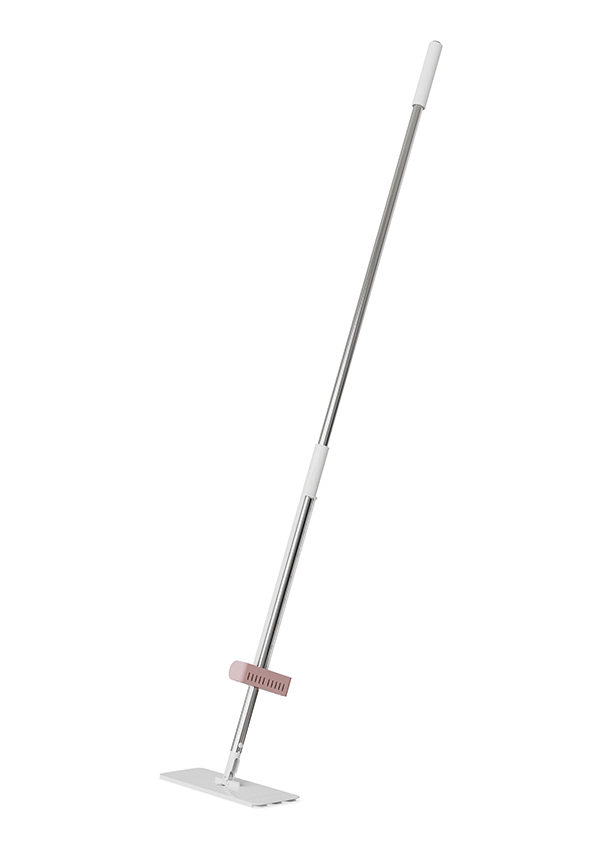
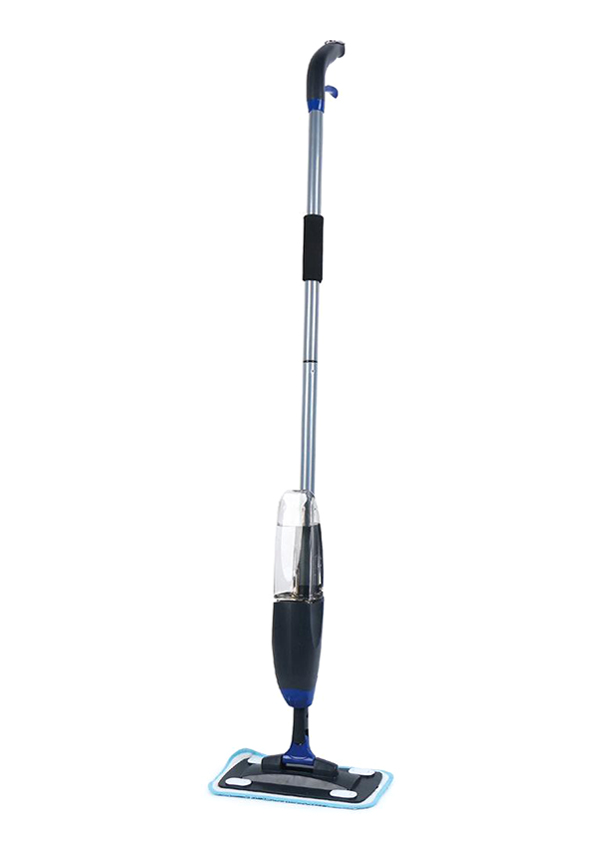
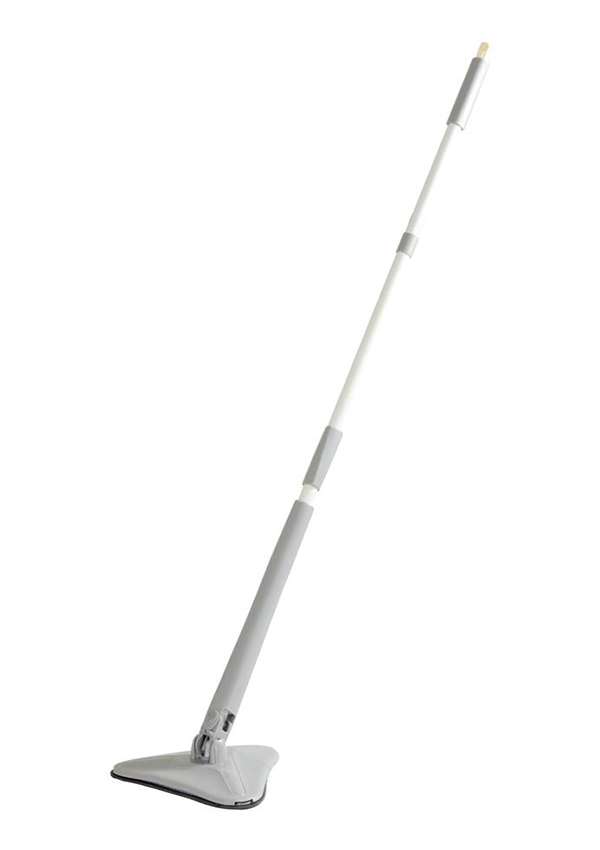
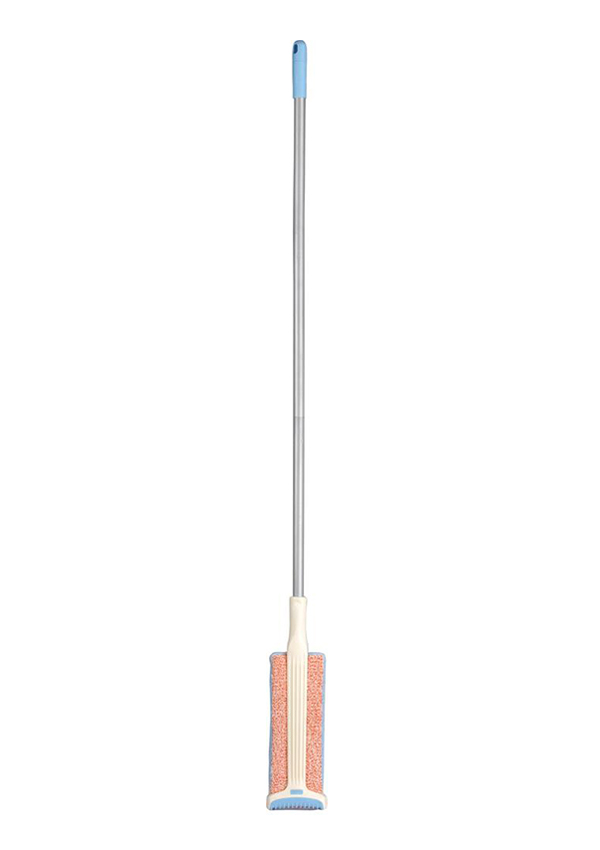
If you are asking which microfiber duster is the best, the honest answer is that there is not one universal winner. The right duster depends on the surface you are dusting, the height you need to reach, and how often you are willing to wash or replace the head. The shortest useful answer is this: for most rooms, start with a flat microfiber duster with a washable pad and a long handle. For delicate furniture, bookshelves, and ceiling fans, add a microfiber feather duster. For high corners, low gaps, and awkward objects, choose a multifunctional dusting duster with a bendable head and a removable refill. The best result usually comes from a small set of dusters, not from one product.
This guide explains why those three designs work, how to compare them, and how to avoid the common mistakes that lead to dusty surfaces and wasted money. The same criteria that matter in a home also matter to a retail buyer or an OEM/ODM customer who wants to prevent returns and protect the product category.
Why microfiber dusters beat cotton cloths and feathers for everyday dusting
Microfiber dusters are not just another cleaning tool. They change the way dust is captured. Microfiber is a synthetic fiber made from a mixture of polyester and usually polyamide. The manufacturing process splits the fibers into tiny strands that are finer than silk. When you move a microfiber duster over a surface, those split fibers create an electrostatic charge. Dust particles are pulled toward the duster and trapped in the loops and channels between the fibers.
This is why a microfiber duster does not just push dust around. Cotton cloth is made from a thicker, single fiber. It can wipe away large particles, but it often pushes fine dust sideways for the next pass to catch. Feathered dusters are good for moving a light layer of dust off the top of a cabinet, but they can also send dust into the air. The dust then settles back onto the same surface or onto a more difficult one.
Compressed air can blow dust out of a narrow gap, but it does not collect the dust. The dust finishes on your floor, on the carpet, or on a nearby shelf. If the room has a closed window and no formal ventilation, the dust usually returns. Microfiber dusters keep the dust inside the pad until you wash the pad.
For people with allergies, a washable microfiber dusting head is safer than a cloth that is used repeatedly in a dusty space. The dust is no longer spread through the air; it is held in the fiber. When you remove and wash the pad, you remove the dust from the room. This is one of the core reasons why microfiber dusters can replace feather dusters in most household and commercial environments.
What the different microfiber duster designs actually do
Once you understand how microfiber works, the next step is to match the duster shape to the surface. There are several main designs, and each one has a clear job.
Flat microfiber dusters for large, even surfaces
Flat microfiber dusters are the most versatile design for daily cleaning. The head is usually a rectangular pad with a short or long handle. The pad is covered in dense microfiber fabric, sometimes with a fringe or flaps that help catch dust and loose debris. A flat duster is excellent for shelves, tables, desks, window sills, baseboards, and floor dusting. It covers a wide area quickly and keeps the dust under control while you move through the room.
If you only want one duster for a normal home, this is the design to keep within reach. A good standard microfiber duster for daily dusting should have a flat, washable pad, a comfortable handle, and no loose parts. The pad should be thick enough to hold dust, but not so fluffy that it leaves lint. Look for a pad that can be removed and hand-washed or machine-washed without falling apart.
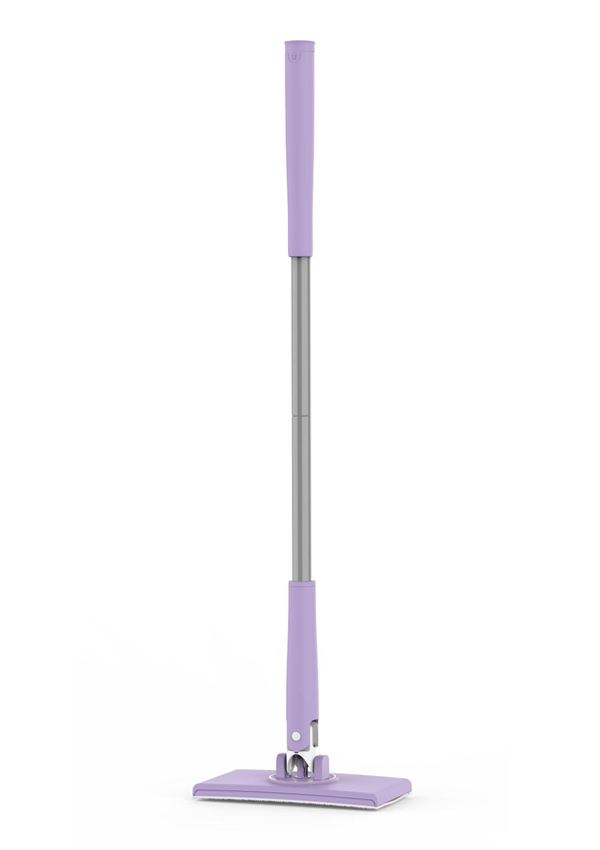
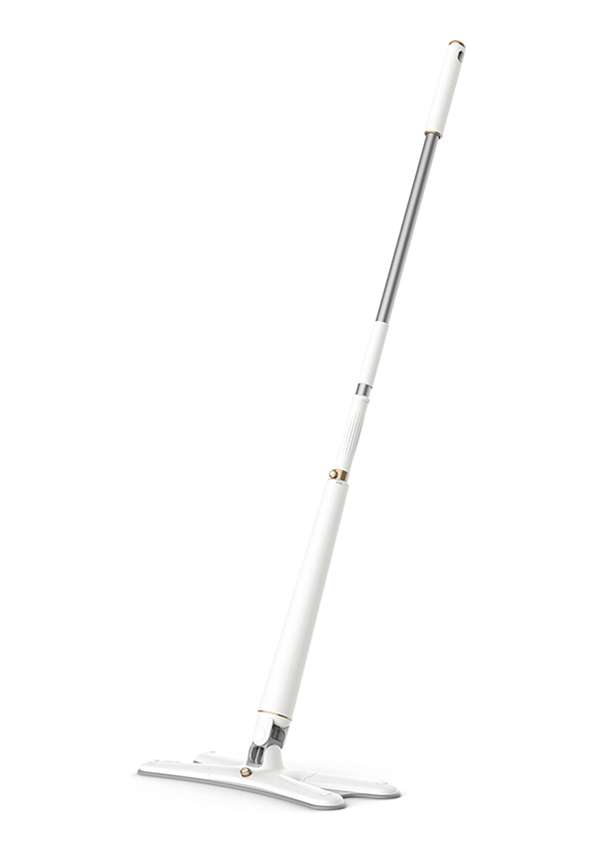
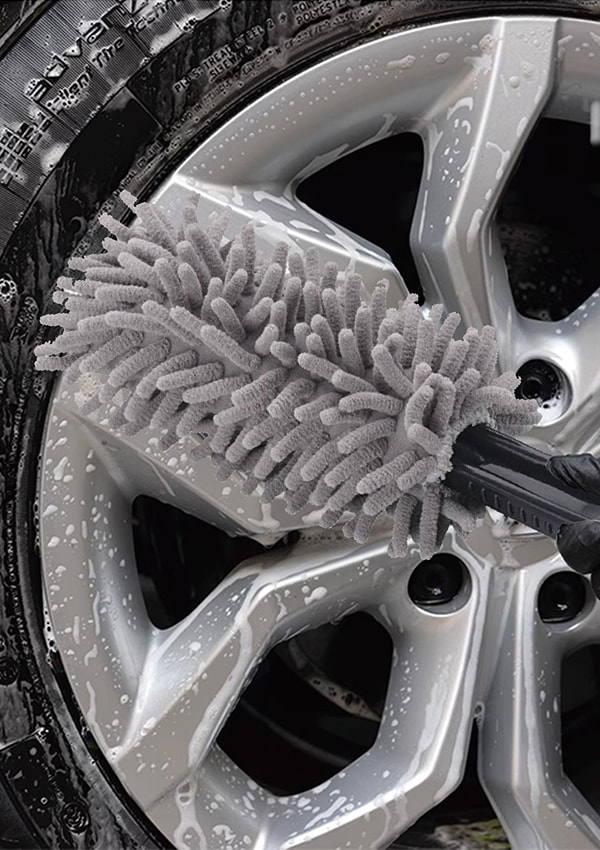 Q9 Microfiber Duster with Washable Pad and Static AdsorptionThis flat microfiber duster uses static electricity to trap dust without scattering it. Its washable head is easy to clean and ideal for daily household dusting on standard surfaces.View Product →
When comparing flat dusters, pay attention to the pad size. A larger pad cuts down the number of passes, but it can also knock over lamps and ceramic items on a crowded bookshelf. A pad between 30 and 45 cm across is a practical size for most household surfaces. For commercial floor dusting, a wider pad may be more efficient, but it needs a sturdy handle and a stable shaft. If the handle flexes too much, the duster becomes hard to control at full extension.
Another detail is the shaft. Fixed-length shafts are simple and durable, but they do not suit high ceilings. Telescopic shafts add flexibility, but the locking mechanism is the weak point. A good telescopic duster should hold its position with little play. If the locking collar slides during use, the duster is not safe for high shelves and ceiling corners.
Microfiber feather dusters for fragile objects and tight spaces
Feather dusters have a soft, fluffy silhouette that reaches into gaps and around delicate objects. A modern microfiber feather duster uses split synthetic fibers instead of natural feathers. It is lightweight, flexible, and works well on bookshelves, picture frames, lamps, blinds, electronics, and collectibles. The fibers are usually arranged in long strands that can bend around obstacles without scratching the surface.
A microfiber feather duster is the best second tool when you need to dust ornaments, window curtains, or window blinds. It also works well on top of cabinets and ceiling fans because it can reach over the edge without using a ladder. The important thing is to keep the head dry and clean. Natural feather dusters are difficult to wash and can trap dust inside the feather structure. Microfiber feather duster heads can usually be removed and washed, which makes them more reliable in the long run.
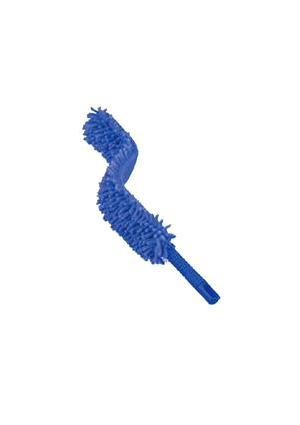 Q5 Microfiber Feather Duster with Interchangeable Chenille and Coral Fleece HeadsThe Q5 offers dual handle lengths and two head materials—chenille for deep dust capture and coral fleece for delicate surfaces. It’s a versatile choice for ornaments, blinds, and high areas.View Product →
The trade-off is that microfiber feather dusters do not have the large flat area of a standard duster. They are better for vertical objects and detailed work than for cleaning a long table. If you use a feather duster and do not wash the head often, you are simply moving dust from one object to another inside the room.
Multifunctional dusting dusters for high, low, and awkward spaces
Multifunctional dusting dusters combine the wide coverage of a flat pad with a flexible frame and a bendable handle. The head can be adjusted to match an angle, which helps with ceiling corners, crown molding, the tops of door frames, and the area under sofas or beds. Many of these dusters have a telescopic handle and a removable microfiber refill, which is washed under the same conditions as a flat pad.
A multifunctional dusting duster is the closest thing to a one-tool answer. It can handle high spaces without a chair, low spaces without bending down, and narrow spaces without reaching your hand into a dirty corner. This is why professional cleaners often use one in every hotel room or office space. If the head can rotate, you can follow the shape of a vent or a handle without changing tools.
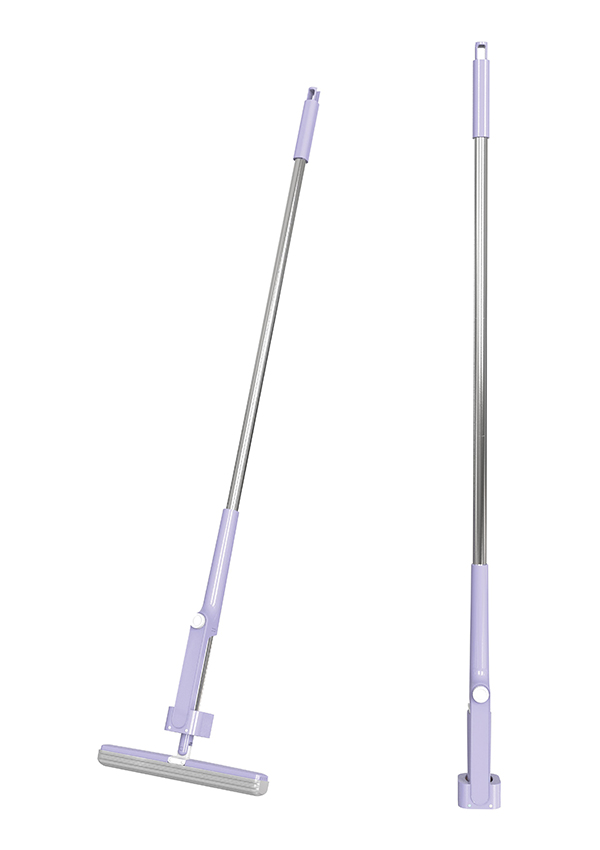
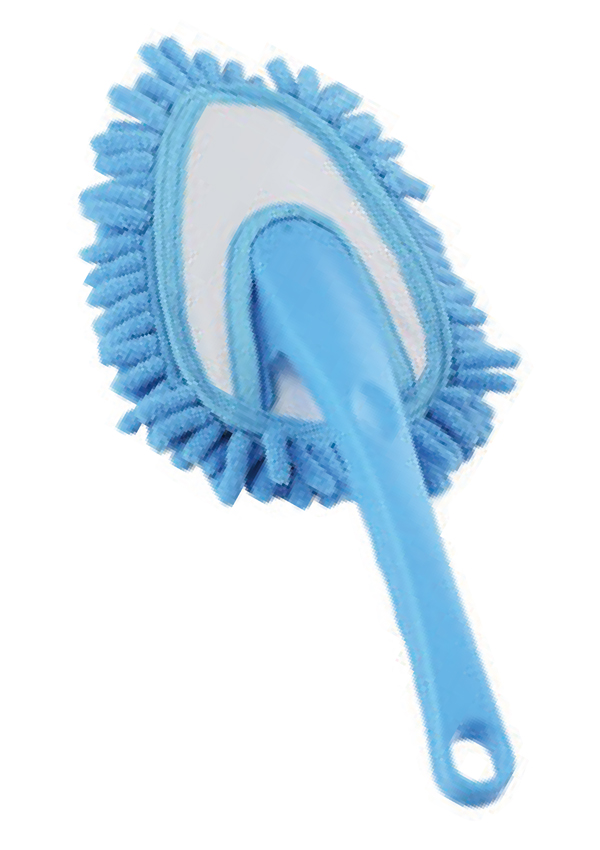 Q7 Multi-Functional Dusting Duster with Rotating Head and Telescopic HandleThis multi-functional duster adapts to various cleaning tasks with short and long handles. Its static-adsorbing chenille or coral fleece heads clean high and low spots without scattering dust, making it a one-tool solution.View Product →
The downside is that multifunctional dusters can be more expensive than simple flat dusters. They also have more moving parts, such as the hinge, the telescopic lock, and the refill clip. Before buying one, test the hinge. A loose hinge makes the head floppy and reduces cleaning pressure. A tight hinge with a soft locking action is better. The weight of the duster also matters at full extension. Because the handle is a lever, a heavy head at the end is harder to control than a light one.
Mini dusters and specialty heads
Not every dusting job needs a tall handle. Mini dusters are useful for car interiors, keyboards, desk fans, vents, and small gaps around furniture. A mini microfiber head is easy to guide into narrow places and can be washed after every use. In most cases, a mini duster is not the primary tool; it is a useful secondary tool for detail cleaning.
Specialty heads are also available for shutters, window blinds, and under-appliance gaps. A shutter duster uses slotted fingers that slide between slats and dust both sides at once. An under-appliance duster uses a low-profile head to reach the gap between a refrigerator and the floor. These products are not necessary for every home, but they are valuable in a larger cleaning system.
When you think about the best duster, think about a set of heads on the same handle. A well-designed handle can accept a flat pad, a feather-style head, a mini head, and a long reach extension. This saves storage space and gives you the right tool for each situation.
How professionals compare microfiber dusters before buying in bulk
A professional cleaner does not choose a duster by appearance. They compare fiber behavior, fabric weight, handle balance, and maintenance needs. A retail buyer or an OEM/ODM project manager has to consider one more factor: consistency. A duster that works well in a sample box but fails after ten washes is a problem, not a bargain.
Fiber behavior and the split-fiber effect
Microfiber dusters are not all made from the same fiber. The best dusters use a blend of polyester and polyamide, commonly around 70/30 or 80/20. The polyamide component adds a slight tendency to absorb water and helps the fiber hold dust. The polyester component gives the duster its dry static charge. The ratio matters less than the split-fiber process.
When the fibers are split, they form tiny wedge-shaped spaces. A fine split creates a soft duster that catches fine dust. A coarser fiber creates a stronger duster that can dislodge heavier dust. For everyday dusting, you want fine, split fibers. If a microfiber duster feels like a regular towel and leaves lint, the fibers may not be split enough. If it feels like a plastic brush, it is too coarse or has too few fibers per square centimetre.
Fabric weight and how it affects performance
Fabric weight is measured in grams per square metre. A lighter duster can be easier to move, but it may not hold enough dust. A heavier duster holds more, but it can feel clumsier on a long handle. In many commercial microfiber dusting tools, the practical range is around 120 to 250 gsm. The exact weight should match the job. A floor dusting pad can be heavier, while a head that is meant for shelves and ornaments is usually lighter.
Do not automatically assume that heavier is better. A 250 gsm pad with a stiff edge can leave dust marks on white surfaces. A 160 gsm pad with open loops can catch dust quickly and rinse out easily. The product should be tested on the actual surface before you place a bulk order. If the pad is too dense, it will collect dust from the air and then release it during washing.
Handle balance, locking tolerance, and reach
Handle balance is often underestimated. A duster that works well when the handle is short can become awkward when the handle is extended. The head acts like a weight at the end of a lever. If the head is heavy, the user has to use more force to keep the duster level. In a commercial setting, this extra force creates fatigue. It can also cause a cleaner to lean too hard, which leaves the duster in a drag rather than a light sweep.
For telescopic handles, the locking collar should have a reasonable tolerance. When the handle is fully extended, a small amount of play is acceptable, but the duster should not wobble side to side. A weak locking collar is a common failure point. It can also be a safety risk when the user is reaching for a high place. The best dusters use a lightweight shaft with a mechanical lock, not a cheap plastic clicker that wears out in a month.
How a duster is cleaned should be part of the decision
If a duster cannot be washed, it becomes less useful. Microfiber dusters should be machine washable, or at least washable in a sink. The pad attachment should stay tight after repeated washing. Velcro that shreds after ten washes is not a good choice. A pocket seam is sometimes more reliable, although it can be more difficult to remove. A clip attachment is fast but must be strong enough to hold the pad during a vigorous sweep.
In food service areas or medical environments, washability is also a hygiene requirement. If the duster head cannot be washed, it should not be used near food preparation surfaces. For facilities that use color-coded cleaning tools, the duster head must be available in a compatible color.
A simple comparison of the main microfiber duster designs and their strongest use cases.
| Duster type |
Coverage pattern |
Reach |
Best for |
Maintenance |
| Flat microfiber duster |
Wide, even |
Medium to high with long handle |
Shelves, tables, floors, baseboards, window sills |
Machine washable pad |
| Microfiber feather duster |
Small but flexible |
High with angled head |
Bookshelves, electronics, lamps, ornamental objects, ceiling fan blades |
Removable and washable head |
| Multifunctional dusting duster |
Wide with bendable head |
High through low |
Corners, crown molding, vents, under furniture, high ledges |
Washable refill |
| Mini duster or specialty head |
Compact for narrow gaps |
Low or handheld |
Keyboards, car vents, blinds, shutter slats, under-appliance gaps |
Washable or disposable head |
Seven questions to ask before you choose a microfiber duster
There are many ways to buy a duster. There are also many ways to buy the wrong one. These seven questions cover the most important decision points for a home user and for a procurement professional.
- What surface am I cleaning? A flat duster is better for tabletops and long shelves. A feather-style duster is better for objects with shapes. A multifunctional duster is better for spaces above and below eye level. If you answer this question clearly, half of the decision is already made.
- How long do I need the handle to be? If you are about 175 cm tall and want to clean ceiling fans without a step stool, look for a telescopic handle that can reach at least 130 cm. If you only need to dust desk and table surfaces, a short handle makes the duster easier to store. The best solution is a handle with a secure lock and a head that can be angled.
- Can the head be washed? Reusable pads save money and reduce waste. They are also more hygienic when they are washed correctly. Disposable refills are convenient when you have no laundry access, but they add a recurring cost. If you use a reusable pad, choose one that can be washed at least 50 times. If the pad starts to lose fibers before that, the product quality is below the standard you should accept.
- Does it trap dust or push dust? The easiest test is to run the duster along a flat, dark surface. If you see a line of dust behind the duster, the fiber is too stiff or too flat. A good duster leaves almost no visible dust behind. In a commercial setting, this test should be performed on a representative surface before you make a large purchase.
- Is the head the right width? A head that is too wide can knock over objects on crowded shelves. A head that is too small takes too long to finish a large room. For home shelves, a head around 30 to 45 cm wide is a practical middle ground. For floors, a wider head with a low-profile frame is more efficient, but only if the handle is rigid enough to push the pad across the floor without bending.
- How does it feel after ten minutes of work? A balanced duster should not cause pain in the wrist or shoulder. The weight at the far end of the handle matters more than the total weight of the product. If the duster is made from heavy steel, it will be tiring. Aluminum or high-quality plastic handles are lighter and usually more comfortable.
- Can I get replacement heads or refills? For a home user, a duster without available refills may become a single-use product after the pad wears out. For an OEM/ODM buyer, the supply of refills is a commercial issue. Ask about the lead time, the minimum order quantity, and the cost of the replacement parts. A low-priced handle with a costly refill is not a good deal in the long run.
Surface-by-surface dusting guide
The best duster is also the one that is used with the right technique. Here is how to choose a method for common surfaces around a home, a shop, or an office.
Wooden furniture and shelves
Use a microfiber feather duster or a soft flat duster on dry wood. Wood is easily scratched by coarse fibers and dirty pads. Do not press hard. Light, slow sweeps are enough. If the wood has a carved surface, a feather-style duster can get into the grooves better. If the pad is wet, it can leave water marks or raise the grain. Keep the duster dry for dry wood. For sticky surfaces, use a damp microfiber cloth, not a wet duster.
Glass, mirrors, and glossy surfaces
A flat duster or a microfiber cleaning cloth works well on mirrors and glass. The duster should be almost dry or very lightly damp. The key is to avoid leaving lint. High-quality split microfiber leaves less lint than cotton. If the glass is dusty, remove the loose dust with a dry duster first. Then use a damp cloth or a specialized glass cleaning tool. This two-step approach prevents the dust from being smeared into a wet film.
Electronics and monitors
Electronics need a dry duster with a soft, gentle pad. Do not spray liquid directly on a screen. Use a mini microfiber duster or a feather-style duster for the front of monitors, keyboards, and desk gaps. Static on the duster can collect the dust without dragging it across the surface. Electronics also benefit from a small, washable head that can be cleaned often.
Ceiling fans, crown molding, and high ledges
Use a multifunctional dusting duster with a bendable head. The bend helps the pad sit flat against a ceiling fan blade or a door frame. Start at the highest point and work down. This way, the dust that falls while you are cleaning is already below you and can be caught by a lower pass. A long handle prevents the need for a ladder, which is safer in both homes and commercial spaces.
Blinds, shutters, and slatted vents
Blinds and shutters need a head that can slide between slats. A shutter duster is ideal because it covers both sides of each slat in one move. If you do not have a shutter duster, use a feather-style duster and sweep along the length of each slat. Be careful with vertical blinds, because a stiff pad can bend them. A mini duster or a small handheld head is safer for delicate slats.
Under furniture and appliances
A low-profile flat duster with a long handle is best. It should fit under a bed, a sofa, or a refrigerator without lifting the furniture. Some dusters have a head that can rotate to clean both the floor and the side of the cabinet in one motion. This is useful in kitchens and hospitality environments where crumbs and dust accumulate near appliances.
Floors, without calling it a mop
A flat dusting pad on a long handle can perform a light floor dusting pass before a mop. It is not a replacement for a mop, but it removes hair and dust before water is applied. Use the same dry pad for the whole floor, then remove it and wash it. If you keep the pad too long, you are just dragging dust across the floor.
How to test a microfiber duster before you buy it
You can learn a lot about a duster in two minutes. This hands-on test is useful for a home shopper and for a buyer at a trade fair.
- Rub the pad on a dark surface. Look for dust left behind. If the duster leaves a visible streak, the fiber is not doing its job.
- Check the pad edge for loose threads. A strong seam prevents the pad from unravelling after washing. Loose threads are an early sign of a low manufacturing cost.
- Extend the handle and shake it gently. If the locking collar moves or the segments wobble, the product will weaken quickly. A quality lock should feel firm and not require much effort to reset.
- Try to remove the pad with one hand. It should be easy to remove but tight enough to stay in place. If the pad falls off under its own weight, the attachment is too weak for daily cleaning.
- Look at the fiber composition. A reliable microfiber duster is made from a polyester and polyamide blend. If the label only says polyester, it may still work, but the dust-catching effect will be less consistent.
- Wash the pad once before testing. Many subtle problems show up after the first wash. If the pad shrinks, loses its shape, or sheds lint, the duster will not last for years.
This kind of quick testing prevents a common procurement mistake: buying a product that looks good on a shelf but fails inside a truck or a cleaning cart. In an OEM/ODM context, the test also tells you a lot about the manufacturer’s quality control. A product with consistent stitching and a clean finish is a better risk than a lower-priced duster with a rough edge and a loose lock.
Maintenance, storage, and cost per use
A microfiber duster works best when it is washed correctly. Wash the pad after every few uses or whenever it feels heavy with dust. Use a mild detergent and warm water. Avoid bleach, which can break the synthetic fibers. Fabric softener should also be avoided. Fabric softener coats the split fibers and reduces the static charge that pulls dust toward the duster. If you use fabric softener, the duster will start to push dust instead of capturing it.
In most cases, a machine wash at 40°C is enough. Dry the pad slowly on a low heat setting, or hang it to air dry. Do not iron the pad or leave it in a hot dryer for a long time. Heat can damage the fibers and shrink the fabric. A well-maintained pad can last for 50 to 100 wash cycles. After that, the fibers may become less effective and should be replaced.
Storage is another detail that is often ignored. A duster that is stored under pressure can lose its shape. Hang it by the handle loop, or keep it flat in a drawer. If the head has bendable wires, do not fold it in a tight circle. A bent frame makes the duster harder to angle in the future. If the pad contains a lot of dust, shake it outside first, then wash it. Shaking helps remove large particles that might clog the washing machine.
Cost per use should be calculated, not guessed. A duster that costs $12 and has a reusable pad that lasts 80 washes may be cheaper than a duster that costs $6 and requires a $2 refill every month. Over a year, the cheap refill system can become more expensive. For a hotel or office, the cost of labor is often higher than the cost of the duster. A duster that works faster and reaches more surfaces in a single pass reduces labor time, which can be worth more than the difference in unit price.
From a manufacturer’s perspective: what makes a microfiber duster a good OEM/ODM product
Buyers in retail and brand management are not choosing a duster for one home. They are choosing a product that a supplier can make consistently, deliver on time, and support with replacement parts. The best duster for a business is one that fits the supply chain, not only the cleaning environment.
When a cleaning tool factory with more than 30 years of experience looks at a duster project, it asks several questions. Is the fiber source reliable? Can the pad be sewn with enough precision? Does the handle lock stay functional after 1,000 extension cycles? Does the refill clip work after repeated washing? Is the packaging strong enough to protect the head during shipping? These are not cosmetic concerns. Delayed delivery, a broken pad in a display box, or a missing refill can damage the customer relationship more than poor dusting performance.
For an OEM/ODM customer, a good duster should also offer some flexibility. The same handle can be fitted to a flat pad, a feather-style head, or a mini head. This reduces tooling cost, cuts inventory stock keeping units, and makes it easier for a store to sell a set. A duster that accepts multiple heads also supports the idea of a cleaning system, which is a strong selling point in retail.
The right duster should be designed with the final user in mind. A handle that is too thick makes the product hard to use for someone with small hands. A handle that is too thin feels unstable for a tall user. A pad that is too large is hard to control in a compact living room. These simple considerations are easy to miss when you only look at a sample.
Another factor is certification. Cleaning tools used in food service environments may need materials that meet food-contact regulations. Dusting heads used in healthcare settings may need to be washable at high temperatures. For export to different countries, packaging and labels must meet local requirements. A supplier that already exports to large retail customers is more likely to understand these needs.
When a microfiber duster is not the best tool
There are a few situations where a microfiber duster is not the first choice. If you are dealing with sticky grease on kitchen cabinets, a damp cleaning cloth is better. If you have liquid stains or spills, a duster will only spread the wet area. If you need to remove heavy dust from a rough concrete floor, a broom is more effective. A duster is designed for dry dust and light debris, not for scrubbing or wet cleaning.
For very large open spaces with tall shelving, a duster can work, but it must be used with a system. A loose pad with a one-time disposable refill may be less expensive to buy, but it creates more waste. A modular handle with a washable head is better for a commercial schedule.
If the dust in the room is very fine or has a high static charge from other equipment, a microfiber duster may become saturated more quickly. This is not a defect in the duster; it simply means you need to wash it sooner. The cost of that extra wash cycle is part of the total ownership cost.
The best answer for most buyers
If you have to choose one duster today, choose a flat microfiber duster with a long handle and a washable pad. It is easy to use, easy to clean, and easy to store. If you have furniture with curves, pictures, or ornaments, add a microfiber feather duster to the set. If you live in a tall house or manage a large retail space, replace the flat duster with a multifunctional dusting duster that can bend, extend, and clean both high and low spaces.
In the long run, the best dusting tool is a system. The handle stays the same. The heads change with the task. A flat pad for shelves, a feather-style head for lamps, a mini head for car vents, and a bendable long-reach head for ceiling corners. This system reduces the number of products you need to buy, makes maintenance easier, and keeps the cleaning quality consistent.
Do not forget the most important maintenance rule: wash the pad, avoid fabric softener, and dry it gently. A duster that is kept clean will work like new for a long time. A duster that is never washed becomes a dust bomb.
So the next time someone asks “which microfiber duster is the best?”, you can answer with a guide instead of a brand name. The best duster is the one that catches dust, works without scratching, reaches the place you need, and can be washed without falling apart. Start with your most common surface, add the second design for the difficult surfaces, and choose a product with enough spare heads or refills to make the set last.
Final decision checklist
- Start with a flat microfiber duster for everyday dusting.
- Add a feather-style duster for ornaments and soft surfaces.
- Choose a multifunctional dusting duster for high and low gaps.
- Pick a washable pad over a single-use refill if you clean regularly.
- Check the handle at full extension before you agree to buy a large order.
- Test the pad on a dark surface to see if it leaves dust behind.
- Calculate the cost per use, not just the purchase price.
- Wash with warm water and mild detergent. Never use fabric softener.
- Store the duster in a dry place where the head can keep its shape.
- For business buyers, choose a supplier that has production experience and consistent quality control.
With these points in mind, you can choose a microfiber duster that is genuinely the best for your space, your schedule, and your budget. The right duster will make dusting feel like a small part of the cleaning routine instead of the reason you avoid the job.